Concrete is the base of all buildings we see today. Whether it is residential or commercial buildings, concrete plays an important role in deciding how strong a building is.
In fact, concrete is used twice as much as any other construction material. When you talk to professional builders or engineers, two names keep coming up: PCC and RCC. Both are used for different purposes, but their correct usage can ensure that your house remains stable for years to come.
Let’s understand in detail about PCC vs RCC in construction, the difference between PCC and RCC, and where each belongs in a house build.
What is PCC?
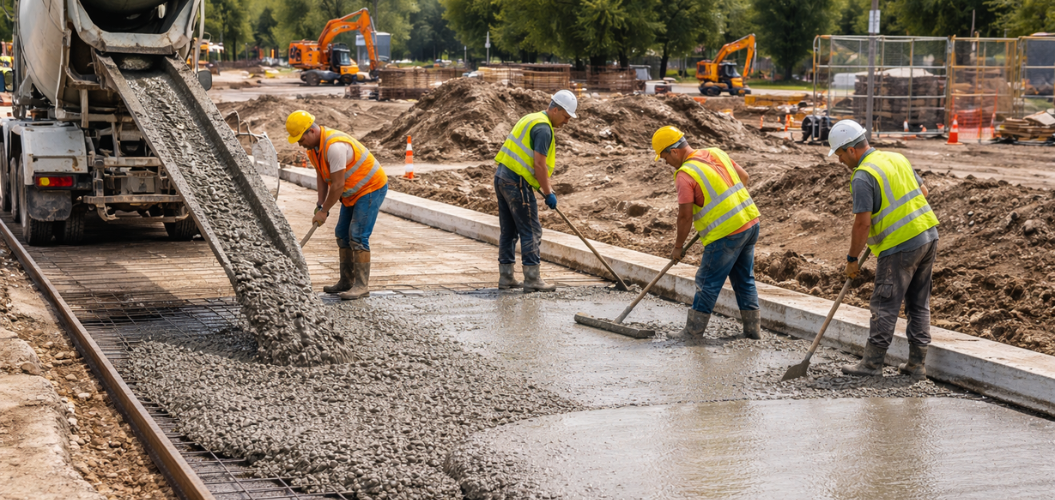
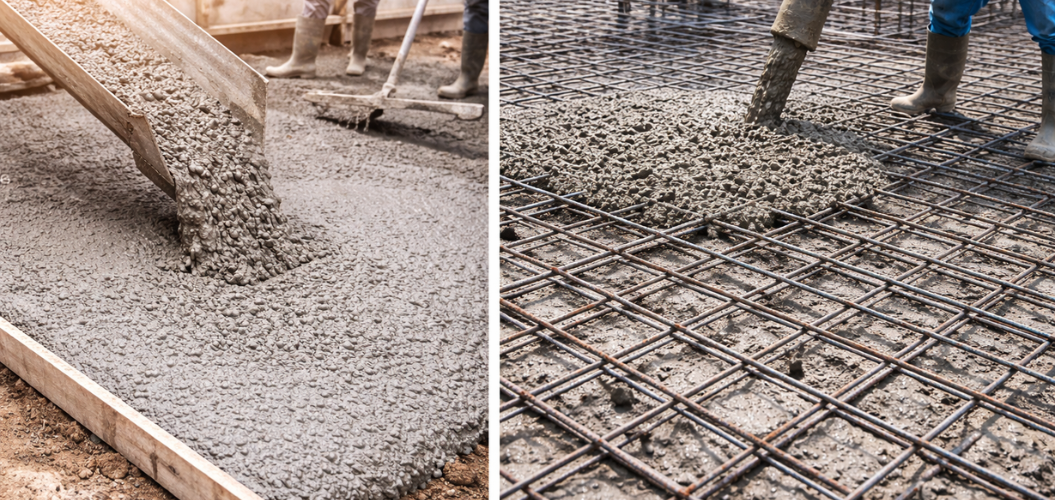
PCC means Plain Cement Concrete. It is the simplest concrete you will see. Mix cement, sand, aggregates, and water, compact it, and let it cure. No steel goes into it.
The job of PCC in construction is practical. It is a bedding or levelling layer. You pour PCC where you need a stable base before you build anything structural.
Why should you use PCC?
- It gives a flat stable surface for foundations and slabs.
- It separates structural concrete from the soil, protecting steel and concrete.
- It reduces capillary rise of moisture from the ground.
- It is cheap and quick to place.
Think of PCC like a tidy bed of gravel that keeps the structure above it comfortable. It is not designed to carry bending or tensile loads. For that, we use RCC.
What is RCC?
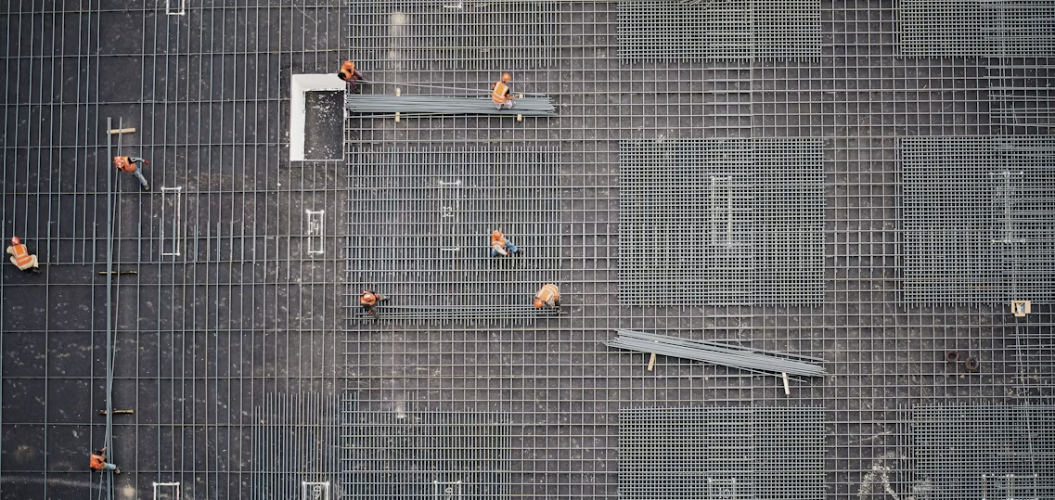
RCC stands for Reinforced Cement Concrete. The ingredients are the same as PCC, with one key addition: steel reinforcement bars. You place the steel cage first, then pour concrete so the steel sits inside.
Concrete is strong in compression. Steel is strong in tension. Together, they create a material that can handle both types of stress. That is why RCC is the go-to for load-bearing work.
Where you see RCC
- Columns and beams
- Slabs and cantilever structures
- Staircases and tie beams
- Foundations that carry heavy loads
RCC is the backbone. It needs careful detailing, correct bar placement, and proper curing. Get any of those wrong and you can have cracks, deflections, or worse.
Must Read: What is RCC in Construction? A Complete Guide for Modern Buildings
Plain Cement Concrete vs Reinforced Cement Concrete: Practical Differences
When comparing PCC vs RCC, the biggest difference lies in their strength and purpose in construction.
1. Composition
- PCC – Cement, sand, aggregate, water
- RCC – Cement, sand, aggregate, water, steel
2. Strength
PCC resists compression but not tension. RCC is made up of concrete and steel. Therefore, RCC can resist both compression and tension.
3. Purpose
The primary purpose of PCC is to act as a base or support material. RCC is used for structural components.
4. Cost
Since steel is not used in PCC, it is relatively cheaper. RCC requires steel, formwork, etc., making it costlier.
5. Construction Process
PCC work is relatively straightforward. RCC construction requires proper reinforcement placement, structural design, and careful curing.
Where PCC is Used in Construction
PCC in construction appears early in the sequence. It is not glamorous, but it matters.
Common PCC locations:
- Bedding under strip footings and pad foundations
- Levelling course under floor slabs
- Base for floor finishes, before tiles or stone are laid
- Small platforms, ramps and drainage trenches
When the soil is uneven or damp, a layer of PCC evens things out and protects the structural concrete that follows.
Where RCC is Used in Construction
RCC forms the structural skeleton. It determines how many storeys you can build and how the house resists wind and seismic forces.
Common RCC elements:
- Columns that carry vertical loads
- Beams that transfer loads horizontally
- Slabs that form floors and roofs
- Staircases that combine loads and geometry
- Isolated and combined foundations in poor soils
How to Choose the Right Material
You do not choose between PCC vs RCC as if they are competitors. You choose based on function.
Ask these simple questions:
- Will this element bear structural loads? If yes, use RCC.
- Is this just a base or levelling layer? PCC is fine.
- What do the structural drawings say? Always follow the engineer.
- What is the budget? Use PCC where reinforcement is unnecessary.
If you follow that logic, most design and cost questions resolve themselves.
Common Mistakes People Make
A few recurring errors cause the most trouble on small builds. Avoiding these basics keeps your building healthy for decades.
- Pouring structural concrete directly onto loose or wet soil, skipping PCC.
- Using PCC where reinforcement is required, then wondering why cracks appear.
- Poor curing of concrete, both PCC and RCC, which weakens the structure.
- Incorrect bar cover in RCC, exposing steel to corrosion.
- Wrong mix ratios, producing weak concrete.
Short Checklist for Site Owners
A little oversight here saves a lot of expense later. Here is a quick checklist before you start your construction project:
- Confirm the structural drawings and required concrete grade.
- Insist on a PCC bedding before footings if soil is not firm.
- Check reinforcement layout and bar cover on RCC elements.
- Ensure proper compaction for PCC and vibration for RCC.
- Maintain curing for at least seven days for normal concrete, longer in dry or hot conditions.
- Keep a record of concrete mix, pour dates and curing practices.
PCC vs RCC: Quick Comparison Table
| Feature | PCC | RCC |
| Full Form | Plain Cement Concrete | Reinforced Cement Concrete |
| Reinforcement | No steel | Steel reinforcement included |
| Strength | Moderate | High structural strength |
| Usage | Base layers and levelling | Structural components |
| Cost | Lower | Higher due to steel |
Final Word
In any commercial or residential construction, you need both PCC and RCC. Plain Cement Concrete creates the platform, and Reinforced Cement Concrete builds the frame. Use PCC for bedding, levelling, and protection. Use RCC where strength and safety are essential. Speak with your structural engineer, check the drawings, and do not cut corners on reinforcement and curing. That approach keeps your house upright, safe, and straightforward to maintain.
Frequently Asked Questions
- What makes PCC in construction different from RCC?
The major difference between PCC and RCC is that reinforcement is used in RCC, whereas there is no reinforcement used in PCC. RCC is used for building structures such as beams, columns, etc., whereas PCC is used for building the base of structures.
- Where is PCC used in the construction of homes?
Before the actual construction of structures begins, PCC is used for laying foundations, flooring beds, etc. This helps in laying a strong foundation for structures that are built using RCC.
- What makes RCC important in building structures?
RCC is important because it combines concrete and steel reinforcement, allowing structures to handle both compression and tension. This makes it suitable for load-bearing components like columns, beams, and slabs.
- Can PCC replace RCC in construction?
No, PCC cannot replace RCC in construction. It cannot be used for structural work because it does not have any reinforcement of steel. RCC has to be used for structural work for strength.
- Which one is used for house construction, PCC or RCC?
PCC and RCC both have to be used for house construction. PCC has to be used for preparing the ground for construction. RCC must be used as the construction framework.