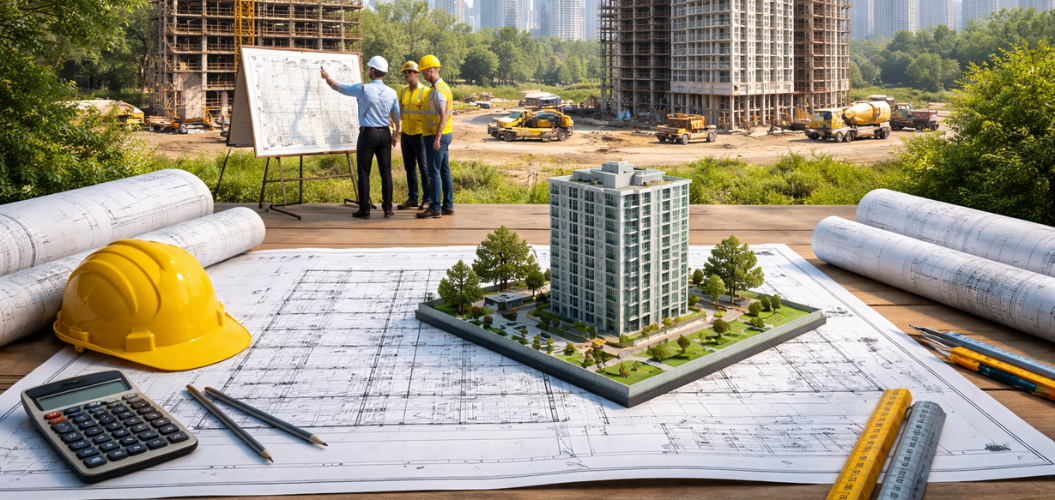
If you are planning to build a house, an apartment, or a commercial property, you will soon hear the term FSI. In urban construction planning, it is a significant factor. In simple words, FSI in construction tells you how much floor area you can legally put on a plot of land.
Local authorities set FSI so cities do not grow chaotically. Without limits, buildings would crowd roads, drain systems, and other utilities. For homeowners and developers, knowing the local FSI is one of the first practical steps in any project.
What is FSI?
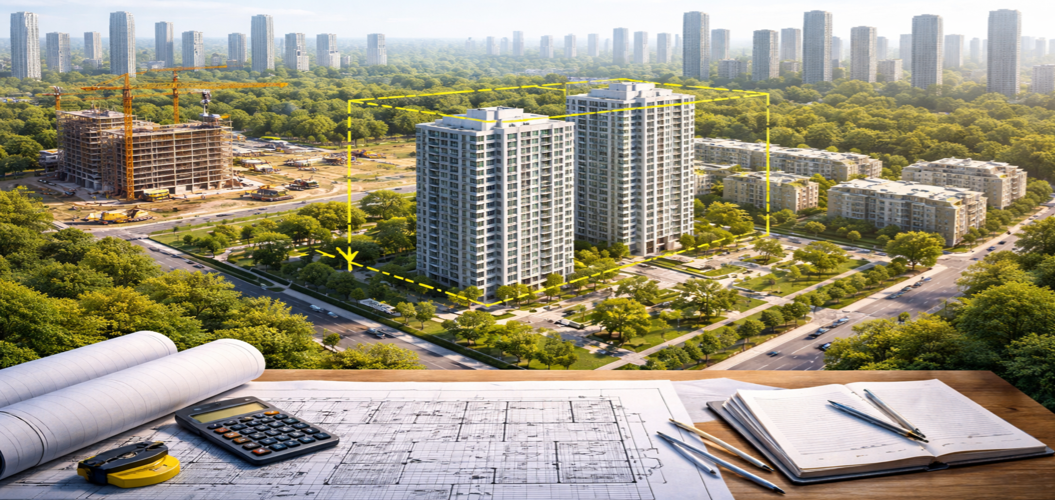
FSI or Floor Space Index is a planning metric used in construction. It compares the total built-up area to the plot area. In simple terms, it is a ratio that defines the maximum buildable space on a piece of land.
FSI turns a plot size into a ceiling size for total floor area across all the floors. That ceiling size influences the architectural design, total costs, and legal approvals in construction.
How is FSI calculated?
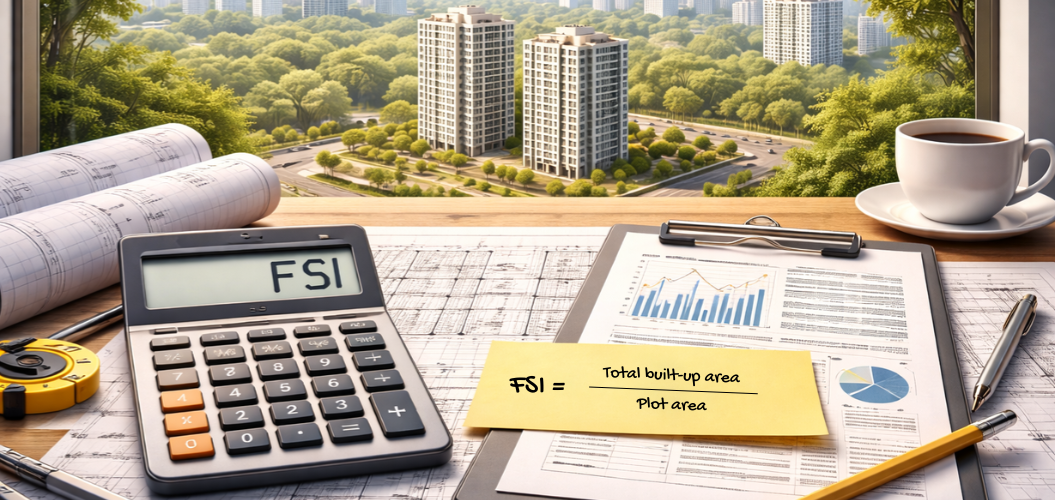
The FSI formula is straightforward.
FSI = Total built-up area ÷ Plot area
Built-up area means the sum of floor areas on all levels. Plot area means the land you own. Municipal rules sometimes exclude areas such as basements used for parking, so check local definitions before you finalise a design.
Example
- Plot area: 1,200 sq ft
- Permitted FSI: 1.5
- Maximum buildable area = 1,800 sq ft
You could split that 1,800 sq ft between floors. For example, 900 sq ft on the ground floor and 900 sq ft on the first floor. That keeps you within the allowed FSI.
Types of FSI
FSI values vary by zone and by city. Here are common categories.
Residential FSI values
The FSI values for residential zones are low so that the area remains pleasant and light and air are not compromised. Low FSI values mean fewer floors and/or more space around the buildings. If you are planning a home, know the residential FSI early, so the design does not waste space. Or you can outsource the project to a professional residential construction company.
Commercial FSI
Commercial areas often allow higher FSI because offices and shops need more floor area. Higher FSI can mean taller buildings or more floors. These projects need extra attention to parking, utilities and safety regulations.
Premium FSI
Some municipal authorities allow developers to buy additional FSI from the city. Premium FSI can make a redevelopment viable in dense areas, but it comes at a cost. Compare that cost with the expected increase in saleable or leasable area before committing.
Reasons why governments set FSI limits
FSI is used by planners to ensure that:
- There is no overcrowding
- Adequate sunlight and ventilation for buildings
- Traffic and road capacity are managed
- Proper drainage and water supply
Without these limits, unplanned rapid development would be difficult to manage.
Factors that affect FSI
FSI is not constant. The government sets its value based on factors such as:
- The location of the plot
- Access to the road
- The zoning classification
- Local development policies
This is the reason why FSI in one town is different from FSI in another town.
How FSI affects design
FSI shapes more than just area. It affects the way a building feels and works.
- Number of floors: Higher FSI allows more floors. Lower FSI encourages low-rise buildings.
- Layout: Architects work to make the permitted area feel open and useful. Good layouts can make a limited area appear spacious.
- Space and amenities: FSI norms provide for parking, landscaping, and other amenities. These factors are important while preparing the final plan.
Common mistakes to avoid
Here are the common mistakes that new builders often make:
– Mistaking built-up area for carpet area
– Assuming FSI norms are uniform across cities
– Planning without checking the norms with the municipality
– Failing to consider exclusions or bonuses that the municipality may allow
How professional builders use FSI while planning
Developers and contractors use FSI while planning to calculate the potential area to be built upon, the floors that can be constructed, and the potential returns that can be earned.
They use it to assess the maximum possible construction area, the number of floors and likely returns on investment. Experienced teams fold FSI checks into the initial planning so there are no surprises later.
Practical tips before you start
A few tips will help avoid problems in the future. First, get the exact value of the FSI and any recent changes in policy from the planning department. Second, verify the road width and accessibility. Third, verify whether parking or basement areas are part of the FSI calculation. Fourth, if premium FSI is an option, get an estimate of the costs involved and the time taken in the process.
Quick pre-start checklist:
- Verify the official value of the FSI
- Verify areas not considered in the calculation of the FSI
- Verify whether premium FSI is necessary or feasible
- Consult an architect familiar with regulations
Conclusion
The extent of development that can be done on the plot of land is determined by the FSI, or the Floor Space Index. This is done by comparing the total built-up area to the plot of land. This ensures that the growth of the cities is done in the most appropriate way without compromising the infrastructure.
If you have a plot of land or wish to develop one, it is essential that you get familiar with the concept of FSI as early as possible in the development of the plot of land.
Frequently Asked Questions
- What is FSI in construction?
The FSI, or Floor Space Index, is a measure that shows the total area available for construction on a plot. This is being used by the local authority to keep a check on the construction density and balance in the area.
- Does FSI apply equally to residential and commercial areas?
No, FSI is not the same for both residential and commercial areas. FSI is higher for commercial areas because they require a larger area of construction, like offices and shops.
- How do I find out the FSI for my plot?
You may find out the FSI for your plot from the local authority. Builders and architects keep a check on the FSI during the initial stages of the construction work.
- Can FSI be raised for a construction project?
Yes, in some cities, the developer may buy premium FSI from the local authorities. This allows for a larger area for construction.