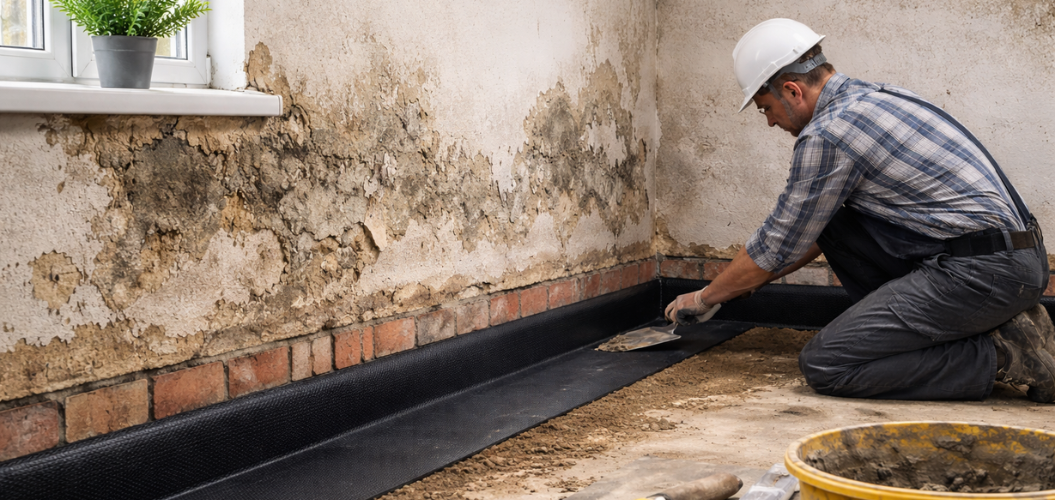
Dampness is one of those building problems that looks small at first, then keeps getting worse. A patch near the bottom of the wall. Paint starting to bubble. Plaster turning flaky. Most people notice the symptom long after the actual problem has started.
And in many cases, that problem is moisture rising from the ground. That’s where DPC comes in. It’s one of the basic things that helps stop moisture from travelling into the building fabric. Without it, water can slowly move through walls and floors and start damaging the finishes from the inside out.
This is why DPC is such an important part of waterproofing in construction. It does not make a building look better, but it definitely helps it stay healthier for much longer.
What Is DPC in Construction?
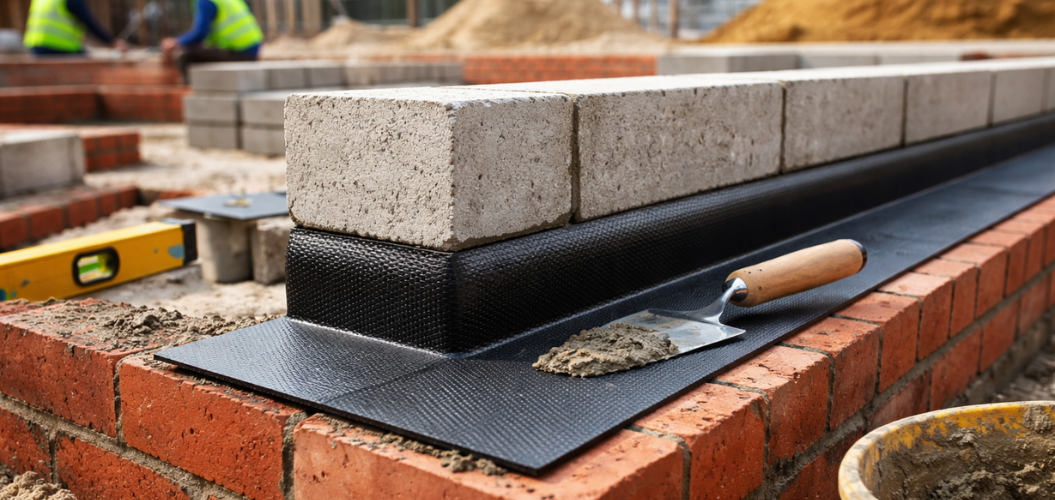
DPC stands for Damp Proof Course. In plain terms, it is a barrier placed in a building to stop moisture from moving upward through the structure. That upward movement happens because common building materials like brick, mortar, and blockwork are porous. They absorb moisture more easily than most people realise.
If those materials are in contact with damp soil, water can slowly rise through them. Not in a dramatic way. It just creeps upward over time. That’s what causes many of the damp patches people later see on walls.
A DPC breaks that path. It creates a layer that moisture cannot easily cross. So instead of rising into the wall above, the moisture stays below that barrier.
It sounds like a small thing, and physically it is. But in terms of performance, it plays a very big role.
Where DPC Is Applied in Buildings
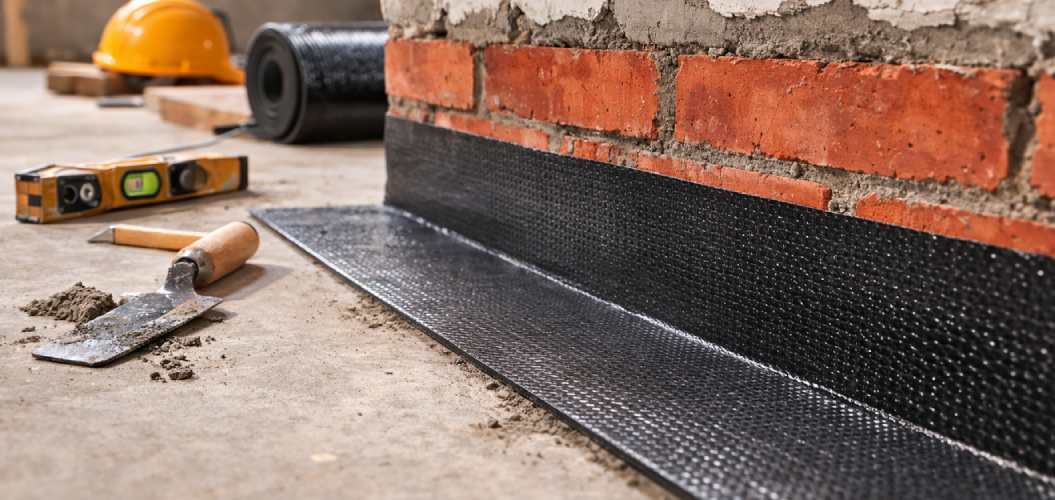
DPC is used in parts of a building where moisture is most likely to enter or rise. It is not placed randomly. Its position depends on where the building is exposed to dampness.
The most common place is at plinth level, which is usually just above the ground. This is the classic location for stopping rising damp before it enters the main wall.
It can also be used:
- Below floors, especially where ground moisture is high
- In basement walls, because those walls stay in contact with soil
- In retaining walls, which hold back damp earth
- In parapets and exposed wall areas, depending on design needs
The idea is simple. Put the barrier where water is most likely to travel. Good planning does that before the construction is finished, not after dampness appears.
See how professional builders can save your money and time so that you don’t have to worry about issues like dampness later.
Common Types of DPC Used in Construction
Different buildings and different site conditions need different kinds of waterproofing in construction. So there isn’t just one type of DPC.
Horizontal DPC
This is the most common one. It runs across the wall, usually at plinth level. Its main job is to stop moisture rising upward from the foundation and the soil below.
Vertical DPC
Vertical DPC is used where moisture enters from the side. Basements and retaining walls are the usual examples. In those situations, the wall is under constant pressure from damp soil, so the barrier has to work vertically.
Integral DPC
This method is slightly different. Instead of placing a separate sheet or layer, waterproofing compounds are mixed directly into the mortar or concrete. That helps the material itself resist moisture movement.
Materials Used for Damp-Proof Course
Several materials are used for DPC, and the choice depends on the location, moisture level, and how the structure is being built.
Some common options are:
- Bituminous sheets: These are very commonly used because they resist water well and are practical on site.
- Plastic or polyethylene sheets: Light, easy to handle, and widely used in many projects.
- Cement-based waterproofing compounds: These are mixed into mortar or concrete when an integral damp-proofing approach is used.
- Mastic asphalt: This creates a dense moisture-resistant layer when applied properly.
- Metal sheets: These are less common today, but older construction methods did use them.
The material matters, but so does workmanship. A strong material installed badly can still fail.
Benefits of Proper DPC in Construction
When DPC is done properly, it prevents a surprising amount of trouble later. Most of the time, people do not notice it working, and that’s actually the point.
Some of the main benefits are:
- Stops rising damp: This is its core job. It blocks moisture before it moves into the wall above.
- Protects paint and plaster: Dry walls hold finishes much better over time.
- Helps the building last longer: Less moisture usually means fewer long-term deterioration issues.
- Reduces maintenance work: Damp repairs tend to repeat. Good DPC helps avoid that cycle.
- Improves indoor conditions: Dry interiors are more comfortable and healthier.
So while DPC sits hidden inside the building, its effect shows up in how well the building ages.
Common Problems When DPC Is Missing or Poorly Installed
When DPC is missing, damaged, or placed incorrectly, the results usually show up slowly. That’s why people often ignore them at first.
Some common signs are:
- Damp marks near the lower part of walls
- Paint peeling or bubbling
- White salt deposits on wall surfaces
- Plaster becoming weak or powdery
- A stale smell that never quite leaves the room
These issues often start as minor annoyances, but they rarely stay minor. Moisture problems tend to keep returning unless the actual source is addressed.
And fixing them after construction is almost always more difficult than preventing them during construction.
Role of Experienced Builders in Damp Protection
This is where site execution matters. DPC may be simple in theory, but if the barrier is broken, skipped, or placed at the wrong level, it won’t do the job.
Builders need to make sure the layer is continuous, correctly positioned, and not damaged during later work. Even a small gap can allow moisture through.
That is why experienced teams usually take this stage seriously. At RS Builders, we treat damp protection as part of the building’s long-term performance, not just a box to tick. Because the hidden details in construction are the ones that save trouble later.
That is especially true here. Because once the wall is finished, nobody wants to reopen it just to fix a moisture problem that could have been prevented early.
Conclusion
DPC is not the kind of thing people admire during a site visit. It is hidden, thin, and easy to overlook. But it protects the building in a very practical way.
It helps keep walls dry, protects finishes, reduces maintenance issues, and supports the long-term health of the structure. If it is done properly, nobody talks about it. If it is ignored, the building starts talking about it later through stains, peeling paint, and damp smells.
That’s really the truth of it. DPC looks like a small detail on paper, but in real construction, it carries a lot more importance than it first appears.
Frequently Asked Questions
1. What is DPC in construction?
DPC stands for Damp Proof Course. It is a layer that we put in walls or floors to stop moisture from rising up into the building.
2. Why is DPC important in buildings?
DPC is important because it protects buildings, from getting damp from mold growing and from damage that moisture can cause to the structure.
3. What are the common types of DPC?
There are a types of DPC. These include DPC, rigid DPC and chemical DPC. We use them in situations when building.
4. What materials are used for DPC?
DPC can be made from things. These are bitumen, plastic sheets, mastic asphalt, slate and cement mortar.
5. Where is DPC installed in a building?
We usually put DPC in at the level. We also put it in walls, floors and basements. This is to stop moisture from getting into the building.