
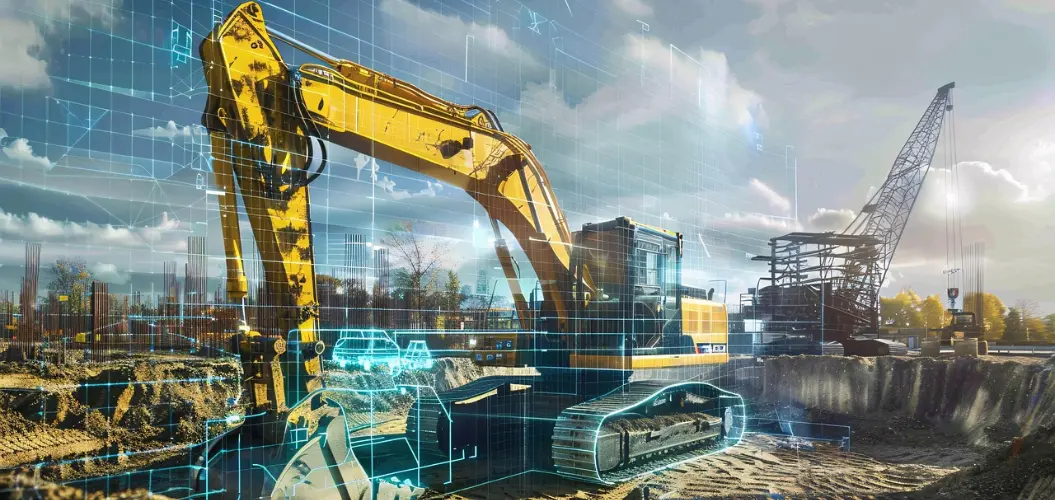
From digital twins and Building Information Modelling (BIM) to 3D printing, Artificial Intelligence, and IoT, technology in modern construction has moved a long way from being a novelty.
Advanced construction technology is now shaping how projects are planned, managed, and delivered. Better design tools and clearer visualisation have changed how teams understand a project before it even reaches the site.
What once depended heavily on manual coordination, paper drawings, and follow-up calls is now supported by live data and shared digital systems. The result is not flashy buildings, but better control, fewer surprises, and smoother execution.
From Manual Processes To Digital Construction Technology

If you have been around construction long enough, you probably remember sites running on rolled drawings, marked-up prints, notebooks, and constant phone calls. A lot of things worked, but a lot of things also depended on people remembering what changed and who was informed.
Technology in modern construction has slowly replaced that dependence on memory and informal communication. Drawings are updated centrally. Revisions are tracked. Instructions are recorded instead of being passed verbally and forgotten a week later.
For a construction company, this shift brings something very practical. It reduces confusion. Teams spend less time figuring out what is current and more time actually building. When information is clear, mistakes reduce, and when mistakes reduce, timelines and budgets become easier to manage.
Smarter Planning And Design Through Technology

One of the biggest differences technology has made is in how projects are planned. Earlier, a lot of understanding came from experience and imagination. Today, tools like BIM allow teams to see the building before it exists.
Instead of guessing how services will pass through slabs or how different systems will overlap, teams can:
- Review the building in three dimensions
- Spot clashes before construction starts
- Understand space constraints clearly
- Coordinate structure, services, and finishes early
This does not remove the need for experience. It supports it. When design intent is clear, execution becomes less reactive. Fewer changes happen on site, and when changes do happen, they are easier to manage because everyone understands the context.
Technology On Site: Improving Execution And Supervision
Construction sites have always been busy, unpredictable places. Information used to travel slowly from site to office and back again. By the time an issue was discussed, it had often already affected progress.
With digital tools, that gap has narrowed.
Supervisors now log progress as work happens. Photos, videos, and notes are shared instantly. Updated drawings are available on site without waiting for prints.
This improves execution in simple but important ways:
- Problems are flagged early
- Decisions are taken faster
- Reporting feels less like paperwork and more like support
For a construction company handling multiple projects, this consistency matters. It helps maintain standards across sites instead of relying entirely on individual supervision styles.
Quality Control And Safety In Modern Construction
Quality and safety were always important, but they were often checked late or documented inconsistently. Technology in modern construction has helped bring structure to both.
Quality checks are now logged stage by stage instead of only at handover. Inspection records, material tests, and approvals are stored digitally, making them easier to track and review.
Safety management has also benefited. Digital audits, incident logs, and training records make it harder for issues to be ignored. When risks are visible, they are addressed earlier.
None of this replaces on-ground discipline. It simply supports it by making accountability clearer.
Faster Decision-Making And Better Collaboration
Many construction delays are not caused by lack of solutions. They are caused by slow decisions.
Digital construction technology helps by keeping everyone on the same page. When information is centralised, decisions move faster and with more confidence.
This shows up in:
- Quicker drawing approvals
- Fewer arguments over versions
- Clearer communication between consultants and contractors
When teams are aligned, work flows better. There is less stopping and restarting, which is often where time and money are lost.
The Practical Role Of Technology For Builders And Clients
Technology in modern construction does not replace experience, and most builders will tell you that straight away. What it does is remove unnecessary friction.
For builders, digital tools reduce the time spent chasing information and resolving avoidable confusion. They allow teams to focus on execution and problem-solving instead of coordination issues.
For clients, the benefit is clarity. Progress is visible. Communication is documented. Expectations are easier to manage. When transparency improves, trust improves as well.
That trust matters just as much as speed or cost on a long project.
How Forward-Looking Construction Companies Use Technology
Not every tool suits every project. The companies that get the most value from technology are the ones that use it selectively and practically.
They focus on:
- Tools that support site teams
- Systems that improve coordination, not complicate it
- Technology that fits the scale of the project
At RS Builders, we adopt digital construction technology to strengthen planning and execution while staying grounded in real site conditions. The intent is not to follow trends but to improve how projects are actually delivered.
Technology As A Long-Term Construction Advantage
Technology in modern construction has moved beyond being a differentiator. It is becoming part of the baseline.
The real advantage does not come from using every new platform or tool. It comes from using the right ones at the right time, supported by experience and clear processes.
When technology is used thoughtfully, projects feel more controlled during construction and more reliable after completion. That is the kind of impact that matters, long after the tools themselves fade into the background.


