There are many visible components in construction. Walls, columns, slabs, finishing, elevations, floors. Aggregate does not receive much consideration in such a context. The material works invisibly, serving in concrete, mortar, base layers, and roads, doing all the hard work behind the scenes.
However, if we define aggregate in construction, its meaning would encompass much more than just sand and stones. This component impacts strength, workability, durability, cost-effectiveness, finish, and performance. In many cases, the quality of aggregate used determines the overall behaviour of a building or infrastructure.
What Is Aggregate In Construction?
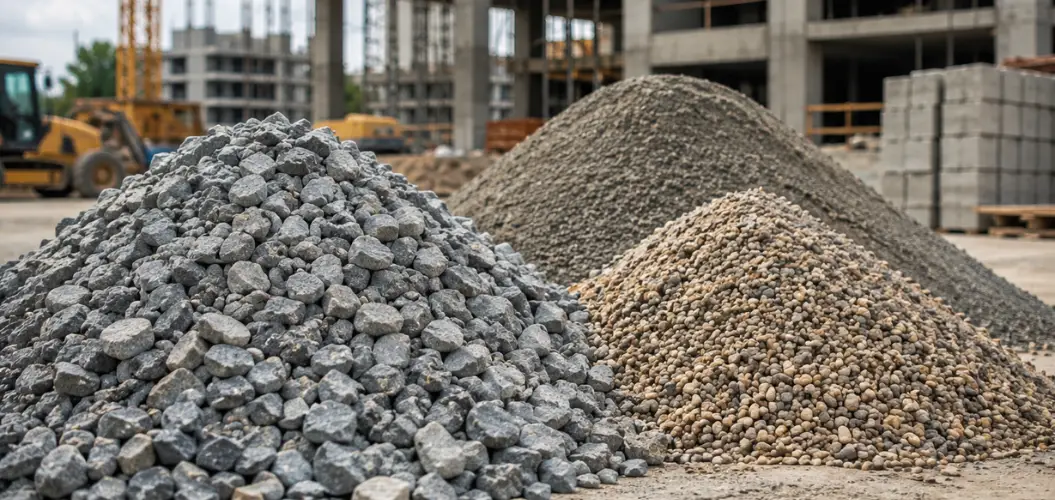
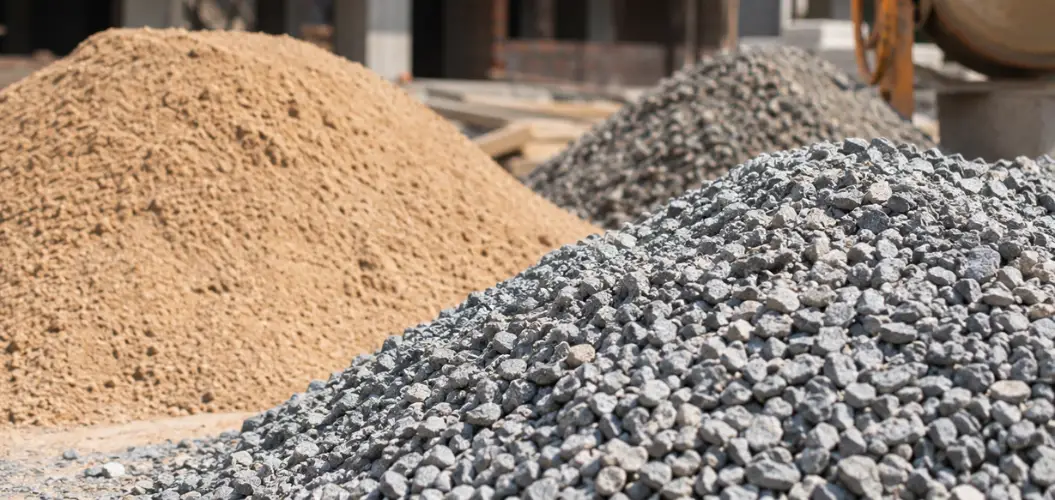
Aggregate in construction means any sand, gravel, crushed stone, slag, recycled concrete, or manufactured sand used in concrete, mortar, roads, road base, drainage layer, etc.
In the case of concrete, aggregates along with cement and water make up a composite mixture in concrete. Cement binds the particles. The aggregates give volume, mass, carrying capacity, and size.
The proportion of aggregate in concrete is around 60%-75% of its total volume. This makes clear that aggregate selection cannot be a minor site affair.
Why Aggregate Is More Important Than It Seems to Be
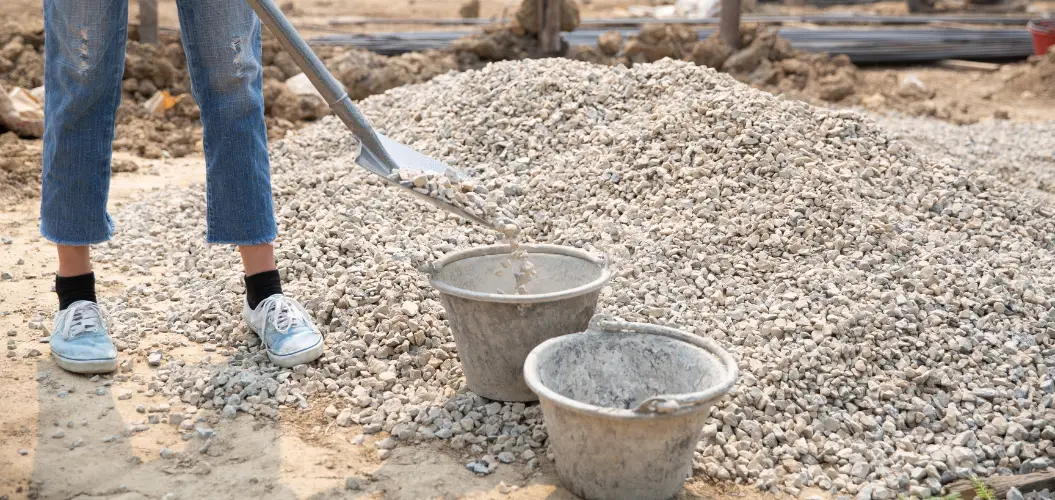
Aggregate in construction affects the process of concrete mixing, placing, compaction, curing, and finishing. Bad-quality aggregate may cause problems while working with concrete. Improper grading will increase the consumption of cement. Weaknesses and flakes of particles may affect the strength. Dirty aggregate may decrease the bond between cement paste and stones.
The easiest way to explain that is by saying that cement is responsible for binding strength, whereas aggregate provides mass and structure to concrete.
| Aggregate Factor | Why It Matters On Site |
|---|---|
| Size | Affects workability, compaction, and concrete placement. |
| Shape | Influences bonding, voids, and ease of mixing. |
| Grading | Controls density, cement demand, and finish quality. |
| Cleanliness | Clay, silt, or dust can weaken cement bonding. |
| Strength | Weak aggregate can reduce concrete performance. |
| Water Absorption | Impacts water-cement ratio and concrete consistency. |
This is why experienced builders do not look at aggregate only as a purchased material. They look at how it will behave in the actual mix and on the actual site.
Types Of Aggregate Used In Construction
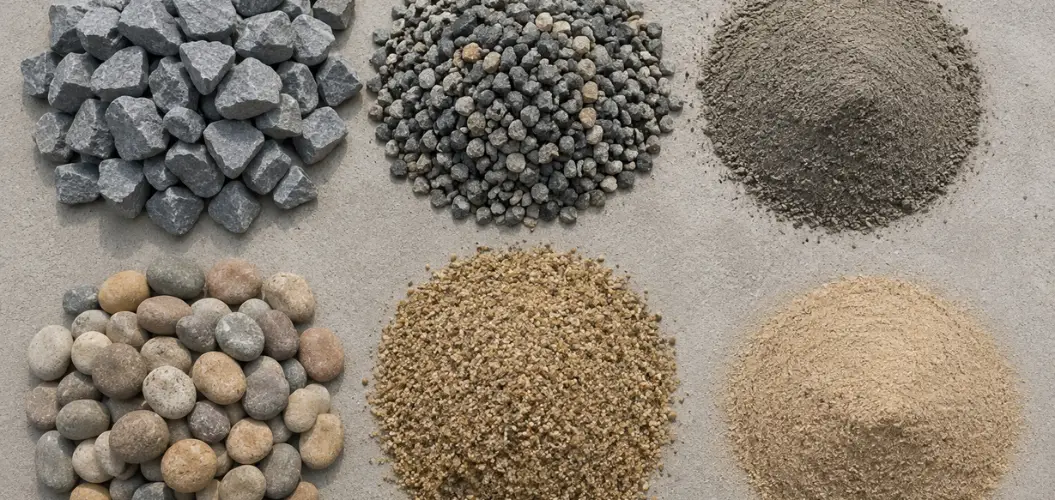
Aggregates are usually classified by size, source, and weight. For most building projects, the two common categories are fine aggregate and coarse aggregate.
| Type | Common Examples | Typical Use |
|---|---|---|
| Fine Aggregate | Sand, M-sand, crushed stone dust | Concrete, plaster, mortar, finishing mixes |
| Coarse Aggregate | Gravel, crushed stone, broken rock | RCC work, slabs, beams, columns, foundations |
| All-In Aggregate | Natural or blended aggregate mix | Selected concrete works where combined grading is suitable |
| Recycled Aggregate | Crushed concrete from demolished structures | Non-critical works, base layers, selected concrete use |
| Lightweight Aggregate | Expanded clay, pumice, lightweight slag | Lightweight concrete and insulation-based applications |
Fine Aggregate Vs Coarse Aggregate
The difference is not only about particle size. Fine and coarse aggregates perform different jobs inside the mix.
Fine aggregate fills smaller voids and helps the mix become workable. Coarse aggregate forms the skeleton of the concrete. If the balance is wrong, the concrete may become harsh, porous, weak, or too cement-heavy.
| Feature | Fine Aggregate | Coarse Aggregate |
|---|---|---|
| Particle Size | Smaller particles, generally sand-sized | Larger particles such as gravel or crushed stone |
| Main Role | Improves workability and fills voids | Provides bulk, strength, and load resistance |
| Common Use | Mortar, plaster, concrete mixes | RCC, PCC, foundations, slabs, beams |
| Site Concern | Silt, clay, grading, bulking | Shape, strength, flakiness, water absorption |
Aggregate’s Function In Concrete Strength
The strength of concrete is determined by factors such as mixing, water-cement ratio, curing, compaction, type of cement used, and expertise. Aggregate plays a role in the whole process.
A bad aggregate may have an effect on concrete in the following ways:
- It may cause an increase in voids in the mix.
- It may require additional water to facilitate its flowability.
- It may cause weak bonds with the cement paste.
- It may cause honeycombing if the mix turns out to be harsh.
- It may affect the surface finish and durability.
This factor becomes more significant in the RCC work. Beams, columns, slabs, footings, retaining walls, and staircase construction require well-mixed concrete.
Quality Checks That Matter Before Aggregate Use
Aggregate selection is not only about buying material from a supplier. It needs checking before use, especially for structural work.
| Quality Check | What It Helps Identify |
|---|---|
| Sieve Analysis | Whether the particle size distribution is suitable. |
| Silt Content Check | Excess fine dust, clay, or impurities in sand. |
| Water Absorption Test | How much water the aggregate absorbs. |
| Flakiness And Elongation | Poor particle shape that may affect strength and compaction. |
| Aggregate Impact Value | Resistance against sudden impact. |
| Aggregate Crushing Value | Resistance against compressive load. |
On site, even a basic visual check can help. Aggregate should not look muddy, overly dusty, flaky, or mixed with organic matter. But visual checks alone are not enough for structural concrete.
Aggregate In Different Construction Services
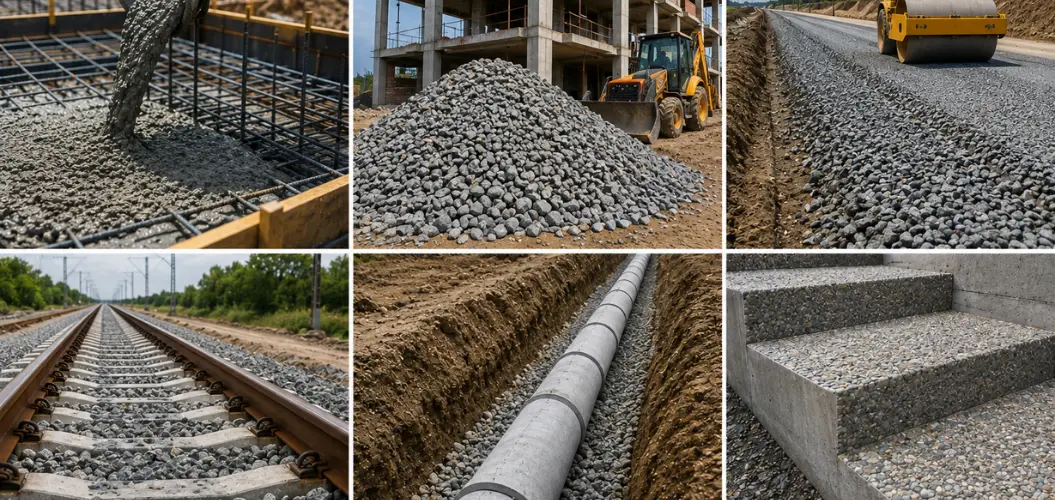 Aggregate is used across many areas of construction, not only in concrete.
| Construction Area | Use Of Aggregate |
|---|---|
| Foundations | PCC beds, footing concrete, backfill support |
| RCC Work | Columns, beams, slabs, staircases, retaining walls |
| Masonry And Plaster | Sand in mortar and plaster mixes |
| Flooring Base | Screed, sub-base, and levelling layers |
| Road And Paving Work | Granular sub-base, wet mix macadam, concrete paving |
| Drainage Layers | Gravel beds for water movement and filtration |
For clients, this matters because aggregate is present in almost every major stage of construction. A home, showroom, office, or commercial space may look finished from the outside, but much of its performance is decided by materials that were selected long before finishing began.
The Sustainability Side of Aggregates
The aggregate requirement is high because construction requirements are high. Sand, gravel, and crushed stone are required in building, road, bridge, infrastructure, and urbanisation projects.
According to UNEP, the world consumes about 50 billion tons of sand and gravel every year, and it becomes the second most consumed natural resource next to water. The same UNEP report claims that sand must be considered as a strategic resource based on the volume of extraction and its environmental impacts.
It does not imply that construction cannot use aggregates. It implies that source control, quality test, wastage control, and proper materials planning are more critical now.
Some practical suggestions are as follows:
- Use of approved sources for sand and stones.
- Avoidance of wastage at sites without necessity.
- Use of manufactured sand, when possible.
- Use of recycled aggregates only when possible.
- Proper quantity planning using BOQ and phased procurement of materials.
Why Aggregate Selection Needs Builder Experience
Aggregate is a basic material, but its use is not basic. The same aggregate may perform differently depending on mix design, cement type, water content, reinforcement spacing, structural member size, weather, and curing conditions.
This is where experienced construction judgement matters.
At RS Builders Mohali, material decisions are seen as part of the larger construction process, not isolated purchases. Aggregate selection connects with structural planning, concrete quality, site supervision, vendor coordination, and execution discipline.
Bottom Line: Small Components – Great Responsibilities
Although aggregate is not the most visible component of any structure, it is definitely one of the most essential. Aggregate provides concrete with its substance, determines its strength, regulates workability, durability, and cost.
Aggregate is basically a material base of numerous construction operations. It dictates the behaviour of concrete, the performance of structural operations, and allows going from sketches to reality.
Frequently Asked Questions
1. Can poor aggregate quality cause cracks in concrete?
Poor aggregate can contribute to cracking if it affects bonding, water demand, compaction, or concrete strength. Cracks may also come from curing issues, structural movement, shrinkage, or poor workmanship.
2. Is M-sand better than river sand for construction?
M-sand can be a good alternative when it is properly graded, clean, and sourced from approved suppliers. Its suitability depends on the type of work, mix design, and quality testing.
3. Why does aggregate size change for different concrete works?
Different structural members need different aggregate sizes for proper placement and compaction. Dense reinforcement, thin slabs, and narrow sections usually need better-controlled aggregate sizing.
4. Should aggregate be washed before use?
Aggregate should be clean and free from excess dust, clay, silt, and organic matter. Washing may be required when the material has visible impurities or fails basic cleanliness checks.
5. How do construction services ensure aggregate quality on site?
Good construction services check source reliability, grading, cleanliness, moisture, particle shape, and suitability for the mix. For structural work, lab testing and proper site supervision are important.