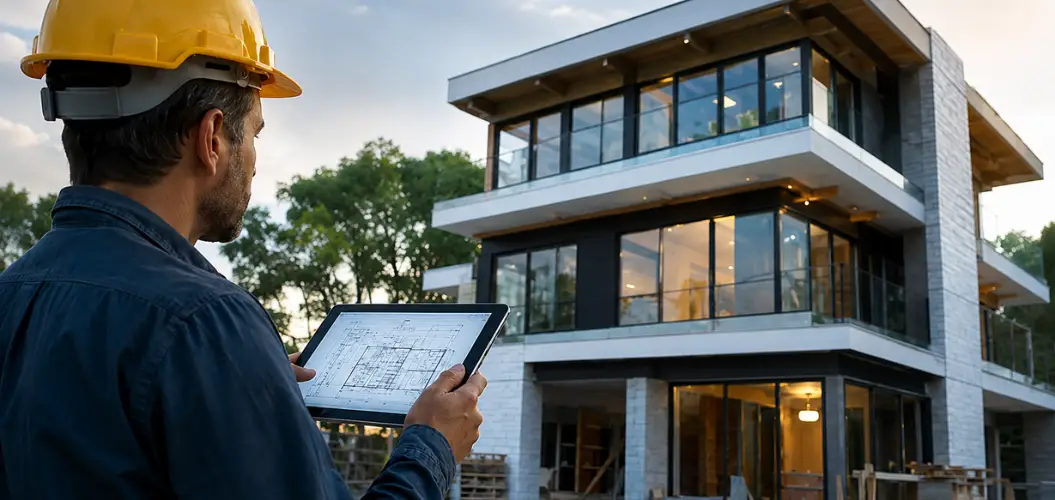
The smart home doesn’t start at the stage of the mobile application; it starts even before, designing the building plan, wiring and utility connections, selecting construction materials, and considering future demands.
It is precisely there that smart construction technologies can be applied in order to assist designers, engineers, builders, and property owners in making smarter decisions. They might increase accuracy on the construction site, help control the project, and prepare the house for possible upgrades in the future.
As a consequence, one ends up not with a gadget-filled house but with a thoughtfully designed one.
What Are Smart Construction Technologies?
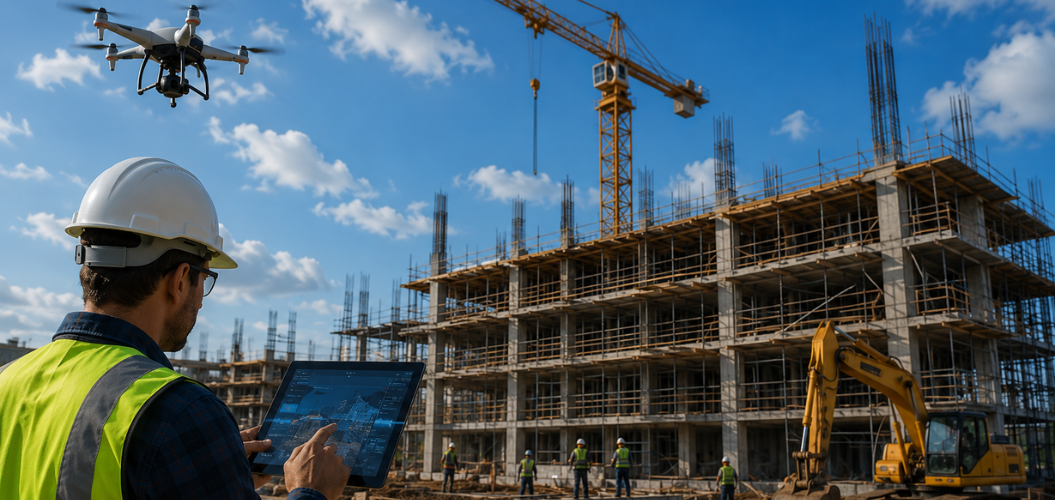
Smart construction technologies are those tools, devices, new technologies, and plans that are utilised during the design and construction process of your house.
They can be classified into three major categories:
- Planning tools, which consist of 3D modelling, walk-through, and Building Information Modelling
- Construction tools that are represented by the digital project management, laser measurement, and site-monitoring systems
- Smart house infrastructure, which includes an automation system, a security system, energy management, and solar readiness
All this can help you save from some mistakes that you could have made otherwise.
Digital Design Helps Homeowners See the House Early
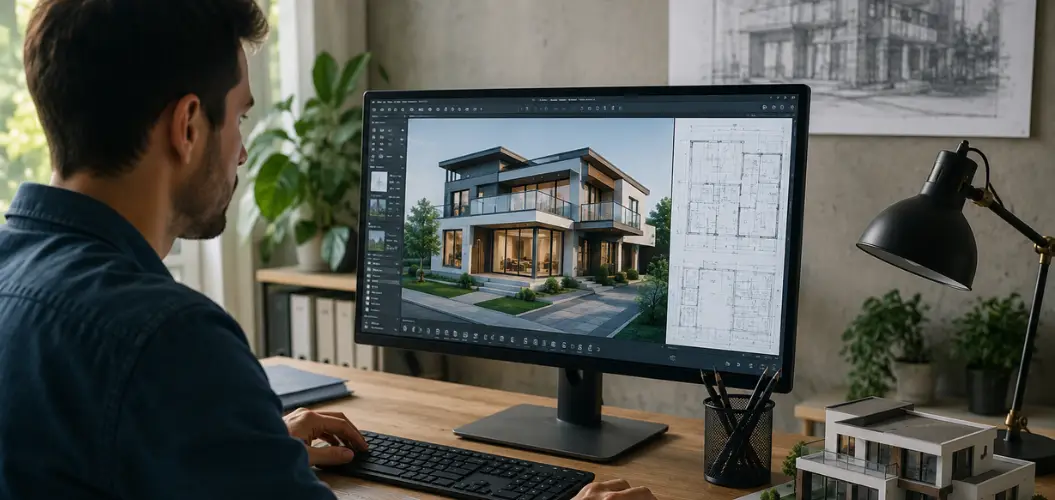
Drawing is good and helpful, but it may prove to be quite hard for the homeowners to visualise what is being done. It provides all the dimensions of the house, but it might be quite hard for the homeowner to visualise what the room looks like.
The solution to such a problem comes from making three-dimensional models and having a virtual walkthrough. The family gets a chance to visualise everything, including room proportions, furniture arrangement, location of stairs, locations of storage places, and also movement between rooms, before even starting with the construction.
Building Information Modeling Enhances Coordination Process
Building Information Modeling (BIM) gathers together all the architectural, structural, electrical, and plumbing information in one computer model.
BIM can support:
- Better coordination between teams
- More accurate construction drawings
- Fewer changes at the site
- Improved quantity planning
- Clearer discussions with homeowners
Correcting a digital model is usually simpler than changing completed construction.
Artificial Intelligence Helps with Better Residential Planning
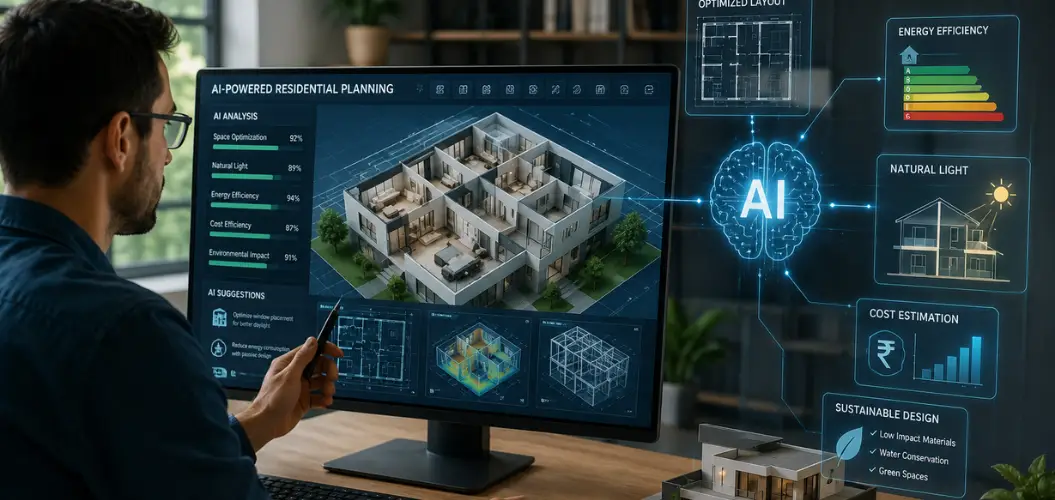
Residential planning through artificial intelligence is currently trending, but it does not mean that the architects, engineers, and expert constructors are to be substituted by AI.
The use of AI allows comparing alternative layouts, studying the utilisation of the space, assessing the quantity of materials needed for the project, and identifying potential risks associated with the schedule.
Nevertheless, each plot, each family, and each construction site is unique. Professional architects and constructors should make the ultimate decision on the matter.
Digital Project Monitoring Increases Transparency
One of the main worries for homeowners is a lack of information about what is going on in the property.
Some of the benefits of digital project monitoring include:
- Photographs of progress
- Update at different stages
- Information about materials used
- Design clearance
- Points where payment is required
- Details of the completed and remaining tasks
This will help make decision-making easy and reduce misunderstandings between the homeowner and the builders.
This will be very helpful for the NRI customers, working homeowners, and those who are unable to visit the property regularly.
Smart Devices Make Construction Site Measurement and Safety Better
Today’s modern construction sites can utilise lasers, measuring devices, leveling devices, camera devices, drones, and cutting tools.
To a homeowner, the advantage is quite clear. There can be better accuracy of measurements, early detection of misalignment issues, and even difficult locations that require inspections without much danger to the person.
Other advanced technologies like robotics and 3D printing have started to get attention, but are not yet commonly used in all residential projects in India.
Designing Modern Homes for Future Automation
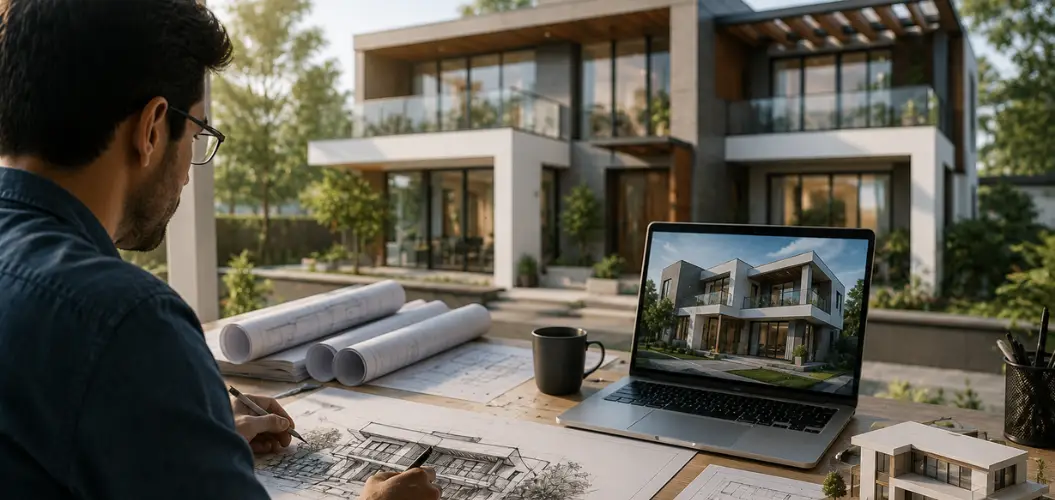
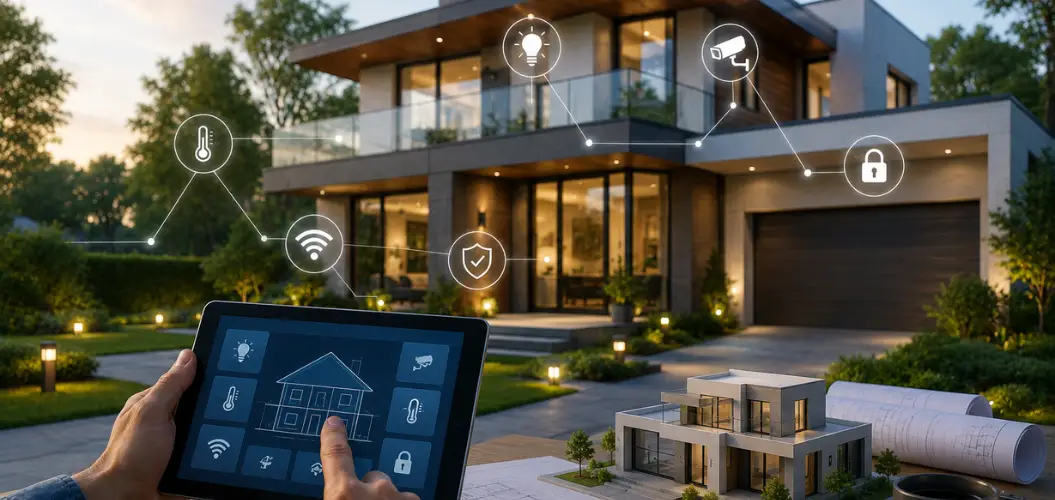
Modifications to accommodate automation would require opening walls and altering wiring or adding exposed wires. Early planning for automation makes things simpler and more economical.
A future-proof house would have:
- Specialised electric outlets
- Internet and network cabling
- Places where sensors can be installed
- Space for control panels
- Connections for backup power
- Extra conduits for future use
Smart lighting would enable scheduling, motion sensors, dimming capabilities, and remote access. Smart security could include digital locks, video phone entry, CCTV cameras, and entrance sensors.
Climate control could assist with AC, ventilation, curtains, geysers, and some home appliances.
It isn’t the number of devices connected that matters, but the selection of those that simplify our lives.
Smart Technologies for Building Energy Efficiency
Technology alone will not create an energy-efficient home. It should be properly designed during the planning stage.
Smart metering technology will tell you what appliances are consuming energy and at what times consumption peaks. In this way, the homeowners can have all the required data on energy consumption.
A good building design should also include:
- Orientation of the building
- Placement of windows
- Ventilation
- Shading
- Insulation
- Proper glazing
- Sun readiness
Even though the installation of solar panels or a charging station may not happen right away, the preparation for them during the building stage will make the process easier later.
Smart Water Systems Become Necessary
Water systems are also becoming smart. Leak detectors will notify homeowners before small plumbing problems create big troubles. Tank level detectors and automatic pumps will help to simplify water management. The system of rainwater harvesting, efficient fixtures, and irrigation will be even more helpful for reducing unnecessary water consumption. Such a system works most effectively if it is planned while designing the house.
Advantages that Homeowners Enjoy from Smart Construction
Here are the many advantages of smart construction.
- Less expensive modifications: Virtual models enable decision-making prior to starting the construction process.
- High-quality construction: Precise measurements and drawings will make the construction process smoother.
- Increased efficiency in resource management: Monitoring energy and water usage becomes possible.
- Higher comfort levels: Light, temperature, and appliances can be controlled more easily.
- Enhanced security: Security systems will allow better observation.
- Easy-to-make future modifications: Proper wiring and extra conduits will allow for future modifications.
Another important advantage is the ability of a smartly planned house to continue being practical even as the requirements of the family and technology develop.
Selecting the Professional Construction Services
An appropriate construction service needs to have an understanding of technology and its implementation.
Homeowners need to select a group that is able to:
- Cooperate in design, construction, electrical installation, plumbing, and automation
- Clearly explain the technical options
- Give clear updates on the construction process at the site
- Offer the system according to the budget available
- Ensure maintenance and future upgrades
- Combine innovation and reliability
It is crucial to avoid technologies that are hard to fix and are completely dependent on one technology platform.
At RS Builders Mohali, we operate on residential, commercial, turnkey, and consultancy projects.
The reason why it is important is that technology should be used to support the needs of the homeowner and not to manage the whole project.
Conclusion
Smart construction of today’s houses is not achieved by installing several gadgets in an already constructed house.
Smart construction begins at the stage of design, proper planning of the utilities, exact implementation, and the ability to adapt in the future. Smart construction technologies allow homeowners to get more information on the construction process, avoid unnecessary changes, and be ready for the use of advanced energy consumption, water consumption, security, and comfort.
Frequently Asked Questions
- What are smart construction technologies?
Smart construction technologies use digital planning, connected systems, automation, and precise tools to improve design accuracy, project visibility, safety, efficiency, long-term performance, and property value. - How can BIM help during home construction?
BIM combines architectural, structural, electrical, and plumbing details in one model, helping teams detect conflicts early, coordinate work, reduce errors, and limit costly rework onsite. - Which smart systems are most useful for Indian homes?
Useful systems include smart lighting, security cameras, digital locks, leak sensors, energy monitors, automated pumps, solar-ready wiring, and climate controls suited to local household needs. - Do smart construction technologies increase building costs?
Some technologies increase upfront costs, but early planning can reduce rework, material waste, retrofitting, and maintenance expenses while improving efficiency, comfort, and overall long-term usability. - How should homeowners choose construction services for a smart home?
Homeowners should assess technical expertise, coordination ability, transparent reporting, service support, future-ready planning, and whether recommended systems genuinely match their lifestyle, budget, and maintenance needs.