Construction has always been a physical process. Concrete, steel, labour, scaffolding, curing, coordination, dust, delays, and everyday decisions form part of the process. However, a silent revolution is going on. 3D printing in construction is evolving from mere headlines into actual structures and even into the industry’s discussions.
This technology is not some magical printing machine that will print the whole building, but it will gradually revolutionise speed, minimise wastage, offer innovative design ideas, and even determine how some components of the construction process should be carried out.
This technology is worth exploring for the firms engaged in construction services before its full-scale adoption.
What Is 3D Printing In Construction?
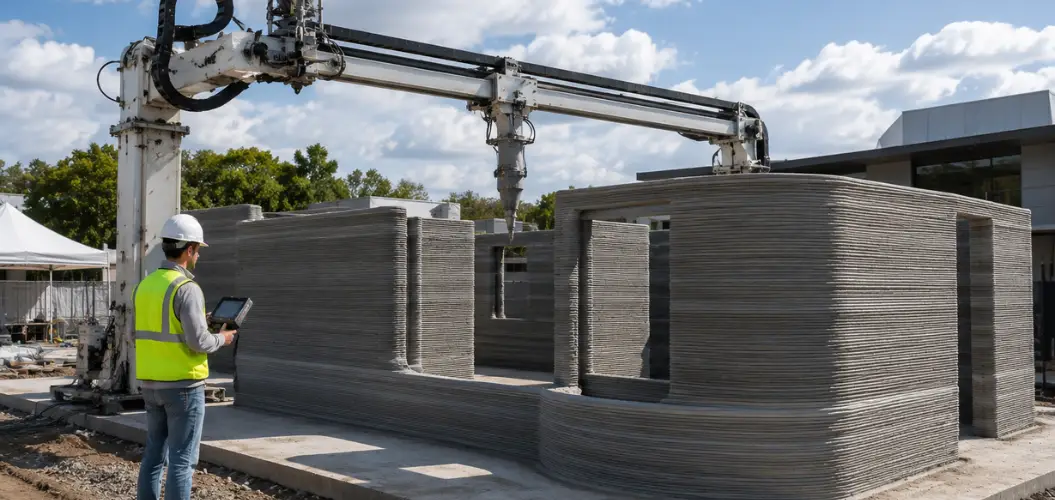
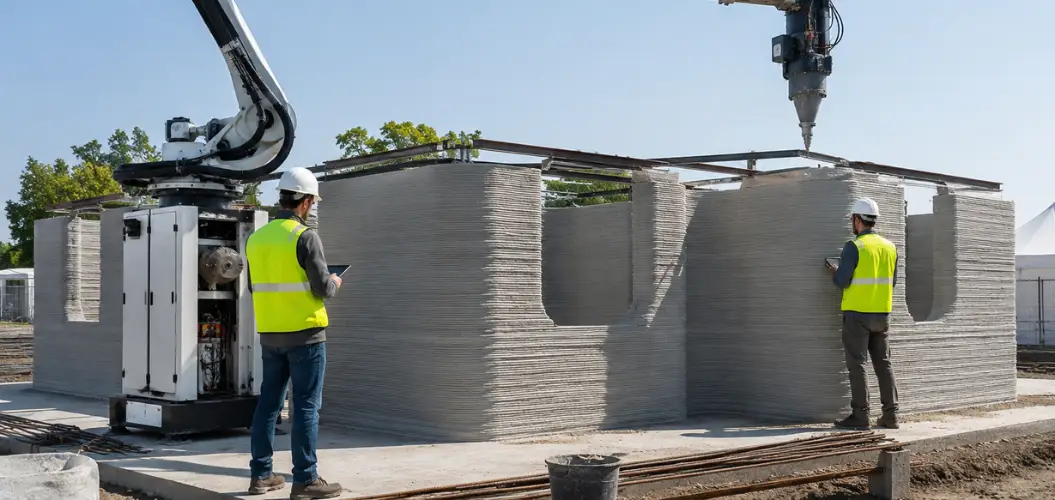
3D printing construction entails the use of a large robot-like printer to place layers of material according to the digital model. Instead of constructing each wall using conventional techniques such as masonry, formwork, or blockwork, the printer moves along a defined path, forming the needed shape through layering.
Today, 3D printing in construction is done mostly through concrete, mortars, clay mixes, geopolymers, or composite materials. One of the most widely used techniques is extrusion, in which the material is extruded layer by layer from a nozzle.
The technique involves creating buildings or construction materials layer by layer using digital models and computerised nozzles. The 3D printing construction market had a value of USD 1.58 billion in 2024 and will grow to be worth USD 54.62 billion in 2030.
This figure gives us a straightforward indication: the industry is growing.
Why The Construction Industry Is Interested
There are various strengths associated with conventional construction, but there are also certain problems. These include factors such as dependence on labour, material wastage, delays, site-related mistakes, and more.
According to a Science Direct review, 3D printing in construction can solve these problems to a great extent, as it combines digitisation with physical construction processes.
Here is where the technology becomes useful:
| Area | How 3D Printing Helps |
|---|---|
| Speed | Repetitive walling or structural forms can be printed faster. |
| Waste Control | Material is deposited where needed, reducing excess use. |
| Design Freedom | Curves, textures, and complex forms become easier to execute. |
| Labour Efficiency | Some repetitive manual work shifts to machine-led execution. |
| Consistency | Digital models reduce variation between planned and built forms. |
This does not mean traditional skills lose importance. In fact, the opposite happens. The printer can only follow what the planning, engineering, material mix, and site preparation allow.
Major Examples of 3D Printing Construction in India
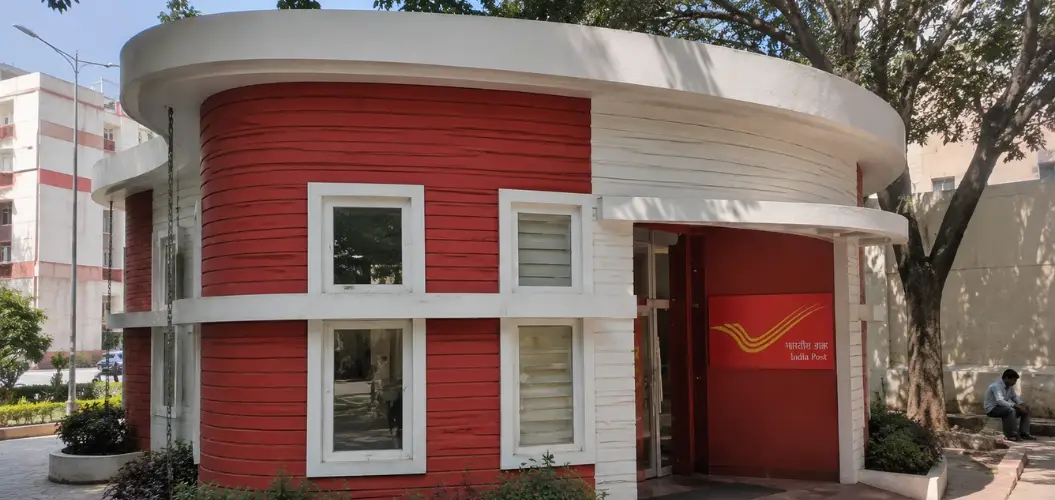
The concept might appear to be far-fetched, but India has had significant examples.
The IIT-M House by Tvasta became India’s first 3D printed house. As per Tvasta, the 500 sq. ft. proof of concept structure was 3D printed in modules at its Chennai facility, assembled on site, and completed in 21 days.
Another major Indian instance is the Halasuru Post Office in Bengaluru. The post office occupies an area of around 1,000 sq. ft., is constructed in 45 days, and covers the complete construction process, including structure, MEP, and finishing.
On its inaugural ceremony, Union Minister Ashwini Vaishnaw termed it as:
“This is a technology demonstrator.”
It positions the building not just as a completed project, but as proof that India can test new construction methods at the public infrastructure level.
Applications of 3D Printing: Where It Can Actually Be Applied
A misconception about 3D printing is that an entire building is being printed using it. This does not usually happen.
In general, 3D printing is applied to some portions of construction, whereas other portions are built the traditional way. Foundation, reinforcement structure, roof, waterproofing, electrical works, plumbing, heating, ventilation, air conditioning, doors, windows, floors, and finishes are still required to have construction expertise.
The most applicable areas are:
- Wall systems in residential and public buildings
- Elements of low rise buildings
- Façade in architectural works
- Landscape structures
- Public utilities building
- Prototype houses and disaster relief buildings
It is where expert construction services come into play. Even advanced technology requires site sequencing, soil conditions, structural integrity, MEP coordination, and finishing considerations.
The Sustainability Perspective
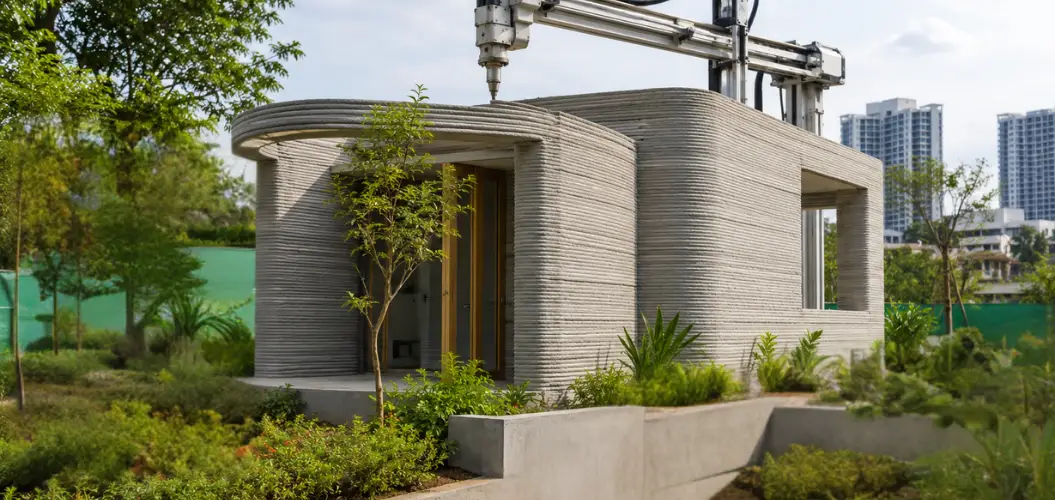
Construction waste is a significant environmental issue. All construction produces trimmings, damaged products, surplus mortar, packaging waste, defective products, and scrap waste. Although 3D printing cannot resolve all sustainability problems, it can decrease waste at some construction stages.
3D printing may help to minimise waste production due to the production of elements with better accuracy and the consumption of the necessary quantity of material. It is also worth mentioning the opportunity to use sustainable materials such as recycled plastic and biodegradable materials, depending on the type of printing.
This is one of the reasons why 3D printing in construction is considered sustainable construction. The lesser waste production, fewer demands for formwork, and precise placement of the material may result in cleaner performance. However, the sustainability of the construction depends on the whole project rather than only on the printer.
What Still Needs To Improve?
The excitement is real, but the challenges are also real. 3D printing is still not a universal replacement for conventional construction.
Some key barriers include:
| Challenge | Why It Matters |
|---|---|
| High initial investment | Large printers, software, materials, and training require capital. |
| Material limitations | Printable mixes need flow, strength, bonding, and setting control. |
| Regulatory clarity | Codes and approvals must adapt to new methods. |
| Structural integration | Reinforcement, load paths, openings, and services need careful design. |
| Skill development | Teams need digital modelling, printer handling, and QC training. |
High capital investment is a major restraint due to the high costs of large format printers, specialised material, and software and training needed for adoption. Therefore, it would be incorrect to ask whether 3D printing can replace constructors.
The more appropriate question is: Which segments of the industry can be improved with 3D printing first?
What Does 3D Printing Mean For Construction Services in India?
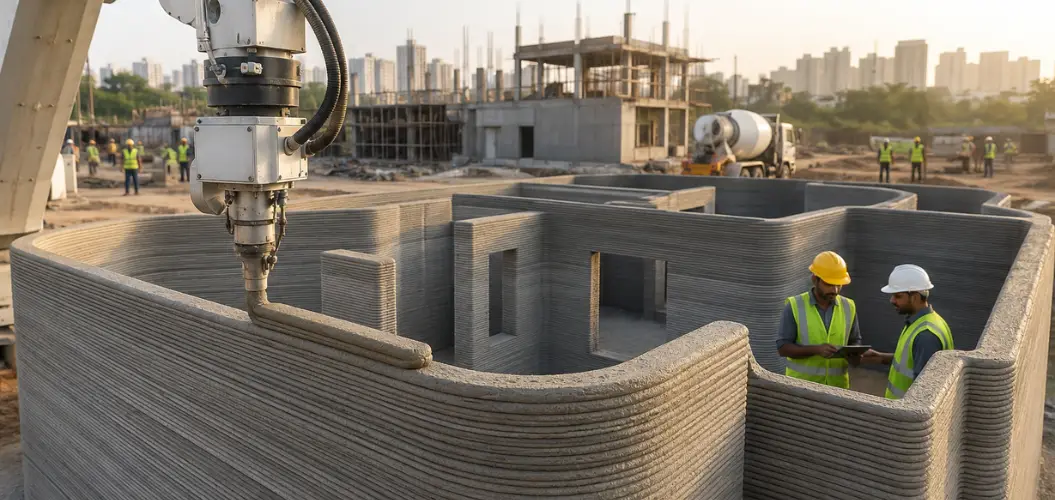
For Indian cities, 3D printing can be useful in affordable housing initiatives, public utilities buildings, low-rise repetitive buildings and architectural components that require a lot of design. It can also be helpful in projects where the key requirements are high speed, repeatability and minimised wastage.
Private houses and commercial properties will have a lower rate of adoption due to clients’ requirements for guarantees about durability, approvals, safety, finishing and overall performance. Therefore, the important role of professional construction companies will remain the same.
At RS Builders, the emphasis has always been placed on planned implementation, clarity at the site, and quality of construction. 3D printing is helpful if it helps to meet these objectives; otherwise, it can become a merely fashionable solution that does not serve any particular purpose.
Bottom Line: Not the Entire Toolbox, Just a New Tool
3D printing in construction is among the most interesting technologies to emerge in the construction industry this decade. It has the ability to speed up construction where it applies, cut down on waste, handle complex designs, and move construction into digital territory.
But buildings are not built using machinery alone; they are built using engineering, planning, material choice, control of the site, and the ability to get the details right.
3D printing might change how some walls and structural parts are built. What will really change is the way of thinking, more precision in planning, and cutting down on waste.
Frequently Asked Questions
- Is 3D printed construction suitable for private homes in India?
It can be suitable for selected low-rise homes or specific building components, but approvals, structural design, material performance, and finishing requirements must be reviewed before choosing it. - Can 3D printing reduce the overall cost of construction?
It may reduce labour use, material waste, and execution time in some applications. However, printer access, material mix, design complexity, and project scale affect the final cost. - Will 3D printing replace conventional construction services?
Not completely. Foundations, reinforcement, roofing, MEP, waterproofing, interiors, and finishing still need conventional construction expertise, site control, and skilled project coordination. - What should builders check before using 3D printing technology?
Builders should check structural safety, local approvals, printable material quality, reinforcement strategy, service routing, finishing needs, and whether the method actually suits the project. - What role do experienced builders play in new construction technology?
Experienced builders help judge whether a new method actually fits the site, budget, approvals, structure, and finishing requirements. With construction experience like that of Er. Ravijeet Singh, technology is viewed practically, not as a trend. It should improve the project, not complicate it.