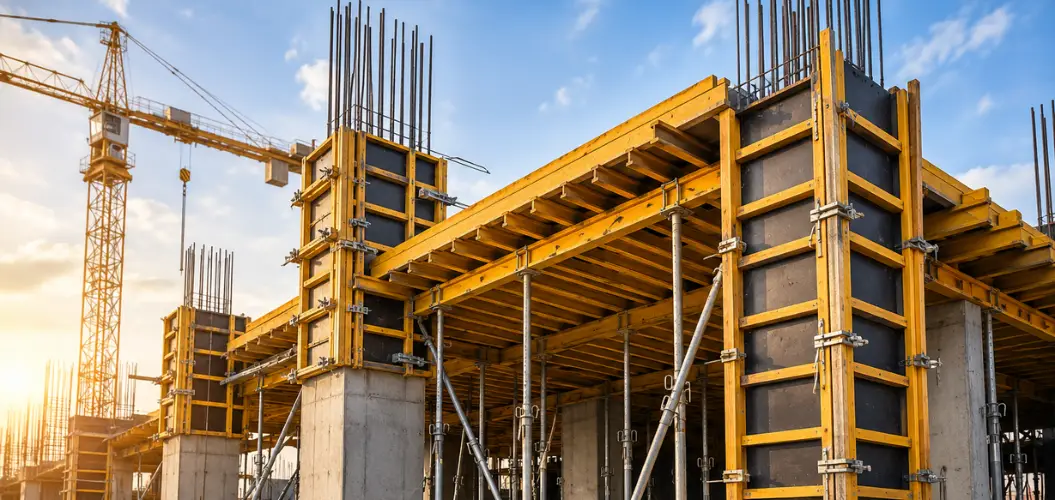
Formwork in construction is a temporary structural framework used to set concrete in place. Any RCC building requires a formwork structure that works as a starting point for construction. It supports the concrete weight until it solidifies and can bear its own weight. Formwork is commonly made of timber, aluminium, steel, and plastic. Let’s learn more about formwork in construction, its role, types, and importance in modern construction.
Significance of Formwork in Construction
Concrete is a strong construction material, but it needs support until it hardens to reach sufficient strength. This is when formwork comes into play. Formwork helps keep the concrete in the required position.
Here are the benefits of formwork in construction
- Ensures the proper shape and size
- Ensures the safety of the concrete
- Improves surface quality
- Reduces wastage
- Increases the pace of construction work
However, a lack of proper formwork can lead to problems such as uneven surfaces, misaligned structures, and weak joints even in the best-planned structure. That is why good constructors never ignore the importance of formwork in their projects.
Forms of Formwork Used in Construction Works
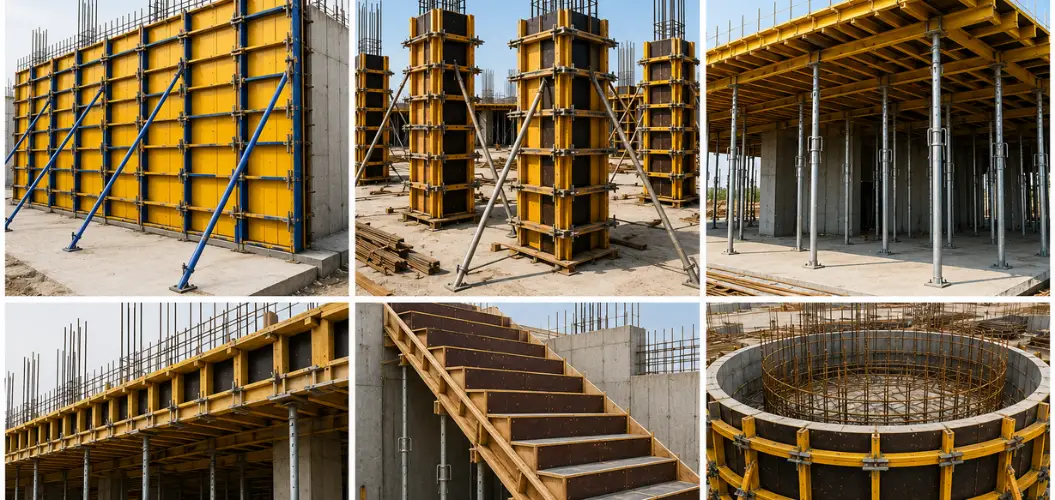
Different types of formworks are required for different construction projects. The same formwork used in residential buildings cannot be applied in commercial construction projects.
1. Wooden Formwork
This is the most popular type of formwork used in construction. It is mostly used in simpler and easier architectural designs. Wooden formwork is very flexible and can be customised as per the needs of the location.
2. Steel Formwork
Steel formwork is rigid and durable. It is normally recommended when precision is required, as it has a repetitive structure. Although it can be costly initially, steel formwork offers better performance in the long run.
The areas where steel formwork can be used include:
- Large construction projects
- Areas with repetitive layout designs
- When structures require similar finishes
3. Aluminum Formwork
Aluminum formwork is lighter and easier to handle compared to steel. It is usually applied in construction sites where repetition of structure is needed.
This type of formwork is usually used in:
- Mass housing projects
- High-rise structures
- Repetitive floor plans
If the planning is done correctly, this will make the process more efficient.
4. Plastic Formwork
Plastic formwork is lightweight and convenient to use in simple repetitive work. In addition, it is easily cleaned and reused, which makes it useful in certain constructions.
This type of formwork is primarily used in:
- Small structures
- Modular construction
- Rapid assembly
How Does Formwork Influence the Construction Process?
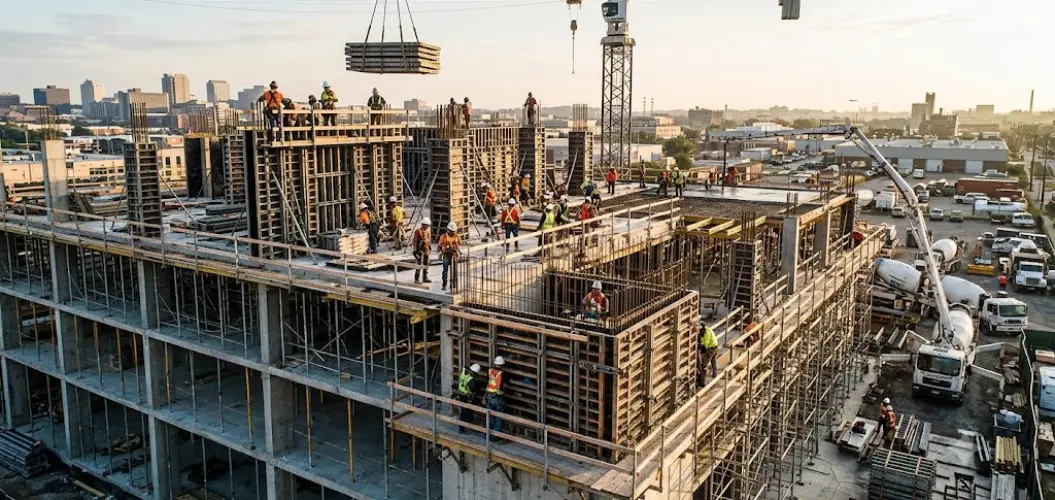
It is not just used to pour concrete but also has a significant influence on the entire construction process.
This is done by the following steps:
- In the first stage, the construction area is estimated
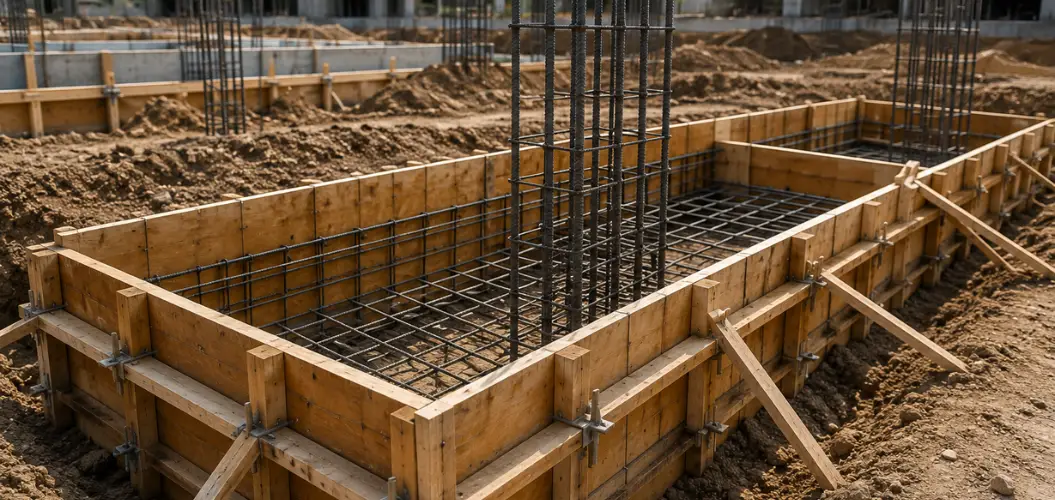
- Formwork is assembled into the right space
- The reinforcement and services are placed where required
- Pouring of concrete in the mold takes place
- The formwork keeps the concrete in place until it hardens
- Afterward, once the concrete is strong enough, formwork is dismantled.
It might seem that all is very simple and does not require any specific skills. However, even the slightest error can influence the outcome of construction significantly.
What Makes Formwork Efficient?
Not all formwork structures tend to be efficient. There are some general characteristics of efficient formwork structures mentioned below.
The characteristics of an efficient formwork include the following:
- Strong enough to hold the wet concrete
- Correct positioning
- Easily assembled and dismantled
- Easily handled by the construction workers
- Compatible with the building design
Also, the formwork must have the capacity to resist the force of wet concrete. In case of a lack of strength, there could be problems like bulging, leakage, and movement of formwork.
Why It Matters For Construction Quality
Formwork directly affects the quality of the finished concrete. If the mould is accurate, the structure is more likely to come out clean and even. If the mould is poor, problems may appear as soon as the shuttering is removed.
It Can Affect:
- Surface finish
- Structural alignment
- Dimensional accuracy
- Safety during pouring
- Project timeline
That is why formwork is one of the first places where practical experience shows. A good construction company knows that the quality of the final structure often starts with the quality of the mould.
Where Formwork Is Used Most
Formwork is part of nearly every concrete project, but it is especially important in work that needs precision or repetition.
Common Uses Include:
- Residential buildings
- Commercial structures
- Foundations
- Retaining walls
- Bridges
- Stairs and lift cores
In larger construction services, the method chosen for formwork can also affect cost and speed. That is why experienced professionals, including site leaders like Er. Ravijeet Singh, tends to give this stage the attention it deserves.
Final Thoughts
Formwork in construction may be temporary, but it carries a lot of responsibility. It shapes the concrete, supports the structure during the early stage and influences the quality of the finished work.
For anyone trying to understand how concrete buildings come together, formwork is a good place to start. It shows how much of construction depends on careful planning before the visible structure even begins to rise.
At the end of the day, strong buildings are not only about concrete. They are also about the systems that hold that concrete in place while it becomes what it needs to be.
Frequently Asked Questions
- How does the choice of formwork affect the overall construction budget?
The type of formwork used can significantly influence labour costs, material expenses, project timelines, and the number of times the formwork can be reused. Selecting the right system helps improve efficiency and reduce overall construction costs. - Can formwork be customised for unique architectural designs?
Yes. Modern formwork systems can be adapted to create curved walls, complex facades, cantilevered structures, and other architectural features that require non-standard concrete shapes. - What factors should be considered when selecting a formwork system?
Key considerations include project size, structural design, construction schedule, budget, site conditions, labour availability, and the number of expected reuses. - How does weather impact formwork performance during construction?
Extreme temperatures, heavy rainfall, and strong winds can affect concrete curing and formwork stability. Proper planning and material selection help maintain safety and construction quality in varying weather conditions. - What role does formwork play in achieving high-quality concrete finishes?
Well-designed and properly installed formwork helps create smooth, uniform concrete surfaces, reducing the need for extensive finishing work and improving the final appearance of the structure.