Take a walk through any neighborhood, business sector, or skyscraper, and you will notice one thing that all of these have in common. There is one material system holding everything together behind the walls. That system is RCC.
The use of RCC in construction has silently turned out to be the backbone of the way buildings exist and function. With the increase in the height of buildings and the changes in demand, the construction of buildings was not possible through traditional techniques.
RCC brought about a paradigm shift in this regard. It allowed designing open areas, supporting heavy loads, and constructing buildings that are intended to serve for many generations. Understanding RCC is not only important for engineers. Builders, architects, developers, and even informed property owners benefit when they know what holds their building together and why.
What is RCC in construction?
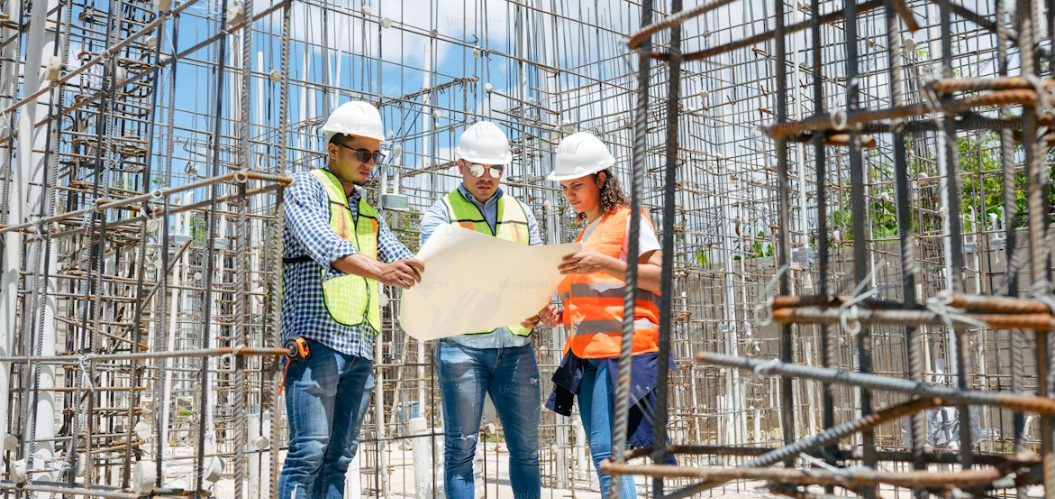
RCC stands for Reinforced Cement Concrete, and despite its technical name, the concept is quite simple.
Concrete by itself is very strong when weight presses down on it. It is called compressive strength. But it does not withstand being pulled, bent, or stretched. That is where steel plays the role.
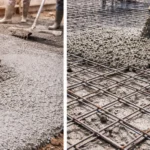
Steel reinforcement bars are placed inside concrete to handle tensile forces. When the two come together, their weaknesses compensate for one another.
- Concrete handles the compression.
- Steel handles tension
This makes the material capable of withstanding loads, resisting bending, and retaining stability when under typical stresses. This explains the use of RCC from small residential houses to high-rise buildings.
Important Elements of Reinforced Cement Concrete
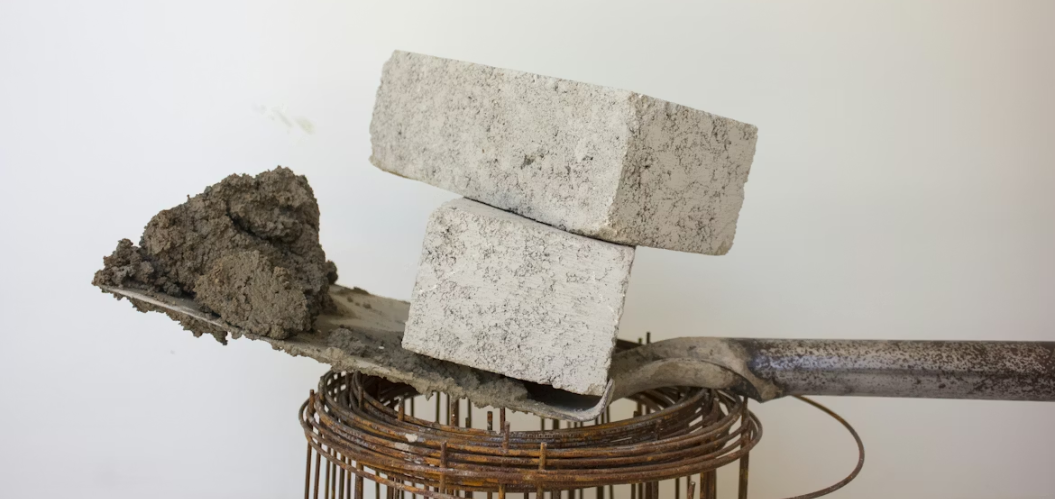
The performance level of RCC depends on how well its constituents are selected and mixed. If the components in RCC are well-proportioned and well-handled, the result will be a structure that works well and can readily last for several decades.
- Cement: It is the cement that holds everything together. The quality of the cement influences the strength of the resultant concrete.
- Aggregates: These are sand and crushed stones. It affects the density and strength of the concrete based on the size and purity.
- Steel reinforcement: The tensile strength is offered by steel bars. The diameter and spacing, as well as the arrangement of steel bars, should correspond to a structural design to make it safe.
- Water: Water activates the cement and enables hydration. Excessive or insufficient water can make concrete weak; hence, a balance is essential.
How RCC Works in Building Structures
Building structures are always under stress. Floors have to resist the weight of people, furniture, and machinery. Roofs have to effectively deal with weather conditions. Walls have to cope with movement.
The elements of an RCC are designed to resist the following forces:
- The columns transfer the vertical loads down to the foundation
- Beams resist bending forces and facilitate loading
- Slabs distribute the weight uniformly over the structure
Steel reinforcement is placed where tension is expected, while concrete surrounds it, protecting the steel and sharing the load. Proper curing allows the concrete to gain strength gradually. Without curing, even the best-designed RCC can fall short of its potential.
Application of RCC in Building Construction
In modern structures, RCC in construction is predominantly applied in various buildings for its adaptability. RCC helps in facilitating flexible designs and vertical expansion in residential structures. In the case of commercial structures, it helps in supporting increased spans and user loads.
Here are some common applications:
- Foundations and footings
- Beams, columns, and slabs
- Staircases and Balcony
- Roof structures & retaining walls
- Water tanks and basements
Advantages of RCC in Modern Buildings
RCC remains dominant in the construction industry as it presents long-term benefits to constructors. When viewed over a building’s entire lifespan, RCC in construction often proves more economical than systems that may appear cheaper initially but require frequent repairs.
Below are some benefits of RCC in construction:
- High strength suitable for multi-storey structures
- Durability when done right
- Fire resistance compared with other constructions
- Design flexibility for architects
- Long life span and easy maintenance
Limitations and Challenges of Reinforced Cement Concrete
RCC is reliable, but it is not forgiving of poor practices. Most RCC issues arise not from the material itself, but from shortcuts during execution. This is why planning, supervision, and experience matter as much as material quality.
The following are some challenges with RCC construction:
- Weak workmanship affects structural performance
- Incorrect reinforcement placement reduces strength
- Inadequate curing impacts durability
- Repairs are difficult once defects appear
RCC vs Other Construction Methods
RCC strikes a balance between various construction systems that suit a wide range of building needs. RCC is often compared with alternative systems.
RCC vs load-bearing construction
Load-bearing buildings rely on walls to support weight. RCC uses a frame system, allowing taller structures and more flexible layouts.
RCC vs steel structures
Steel structures offer speed and lighter weight, but RCC provides better fire resistance and cost efficiency for most residential and commercial buildings in India.
Quality Control and Best Practices in RCC Construction
Strong RCC structures are built through discipline, not assumptions. In RCC construction, quality control is not a final step. It is an ongoing process throughout RCC construction.
Best practices include:
- Accurate mix design based on structural needs
- Correct reinforcement detailing and placement
- Continuous supervision during concreting
- Proper curing for recommended durations
- Regular testing of materials and concrete strength
Role of Experienced Builders in RCC Construction
RCC in construction is not just about pouring concrete. It is about understanding behavior, sequencing, and execution.
Experienced builders know:
- Where common execution mistakes occur
- How to coordinate teams effectively
- Why supervision matters at every stage
Organizations like RS Builders focus on process discipline and site-level accountability because long-term performance depends on it. Industry leaders such as Ravijeet Singh often emphasize that strong RCC construction is built through planning, not shortcuts.
How RCC Supports Sustainable and Long-Lasting Buildings
Sustainability in construction is not just about materials. It is about longevity. Buildings that last longer naturally have a lower environmental impact. RCC plays a key role in achieving that durability.
Well-executed RCC supports sustainability by:
- Extending structural life
- Reducing the need for frequent repairs
- Minimising material waste over time
Why RCC Remains the Backbone of Modern Construction
Despite new materials and evolving technologies, RCC in construction continues to define how modern buildings are built. Its balance of strength, flexibility, and durability makes it suitable for almost every building type.
Understanding RCC helps everyone involved make better decisions, from design to execution. More importantly, it reinforces a simple truth. Buildings stand strong not because of materials alone, but because of knowledge, discipline, and careful execution.
As construction standards continue to rise, RCC will remain central to creating structures that are safe, reliable, and built to endure.
Frequently Asked Questions
- Does RCC construction require regular maintenance over time?
RCC structures generally need minimal maintenance if constructed properly. Periodic inspections help identify surface cracks, water seepage, or corrosion early, allowing timely repairs that prevent minor issues from becoming structural concerns. - How does climate affect RCC performance in Indian conditions?
Indian climates expose RCC to heat, humidity, and seasonal rainfall. Proper mix design, adequate cover to reinforcement, and correct curing practices ensure RCC performs well despite temperature variations and moisture exposure. - Can RCC construction support future vertical expansion of buildings?
Yes, RCC structures can be designed to allow future vertical expansion. This requires planning at the design stage, including stronger foundations and columns, so additional floors can be added safely later. - What role does structural design play in RCC safety?
Structural design determines how loads are distributed through RCC elements. Accurate calculations ensure beams, columns, and slabs work together safely, reducing risks such as excessive deflection, cracking, or long-term structural stress. - Is RCC suitable for earthquake-prone regions?
RCC performs well in seismic zones when designed according to earthquake-resistant standards. Proper detailing of reinforcement, ductility-focused design, and adherence to codes significantly improve a building’s ability to withstand seismic forces.