In any building project, sand is never just sand.
The sand used to make plaster cannot be used for concrete. The foundation will require different strength and grading. The masonry will require bonding. The plaster will need smoothness. The filling will require stability. When these differences are ignored, the building process still moves ahead, but the quality starts carrying hidden compromises.
For homeowners and residential builders, understanding the different types of sand helps explain why good construction services look beyond price and availability.
The Importance of Selecting Suitable Sand in Construction
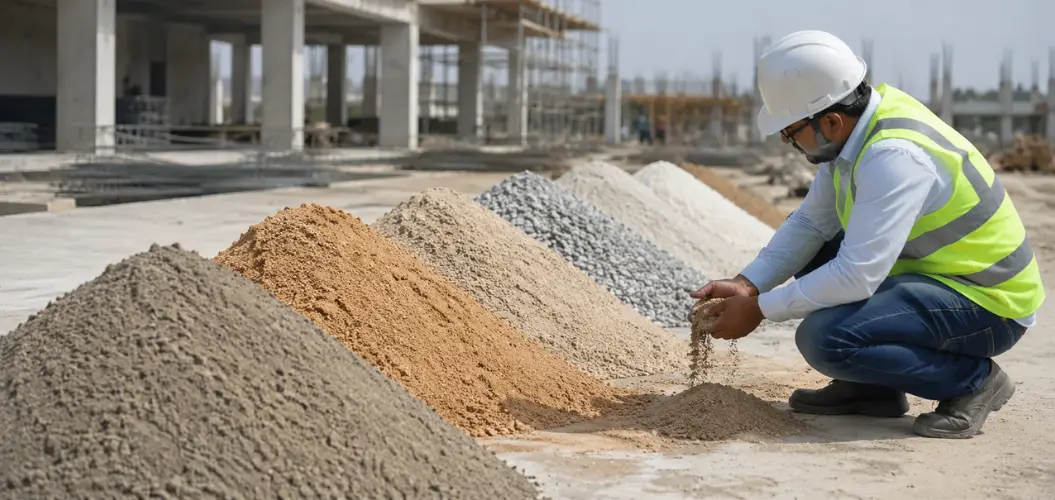
While sand can be employed in different stages in a structure, not all sands would work well everywhere. The kind of sand that works perfectly well for plaster is not suitable for concrete. Also, sand that would be suitable for masonry mortars might not work well for footing and foundation.
This is why site judgement is critical. In Indian construction, the fine aggregate for concrete is evaluated against IS 383:2016, which is the BIS standard for coarse and fine aggregate for concrete. Other sand types according to BIS are IS 2116:1980 for sand used in masonry mortars and IS 1542:1992 for sand used in plaster. This shows how sand is not just a mere site material and has different technical expectations based on its usage.
Quick View: Common Types Of Sand And Their Uses
| Type Of Sand | Common Use In Construction |
|---|---|
| River Sand | Concrete, mortar, plaster, and general construction work when properly graded. |
| M-Sand | Concrete, masonry, and plaster when manufactured to required quality. |
| Concrete Sand | RCC, PCC, slabs, beams, columns, and foundation-related concrete work. |
| Pit Sand | Mortar and masonry work, depending on cleanliness and grading. |
| Plaster Sand | Smooth wall plastering and surface finishing. |
| Fill Sand | Levelling, backfilling, landscaping, and non-structural filling work. |
This table is simple, but site reality is not always neat. Sand quality changes by source, processing, grading, moisture, and cleanliness. Two piles of sand can look similar and behave very differently inside a mix.
River Sand: The Conventional Option
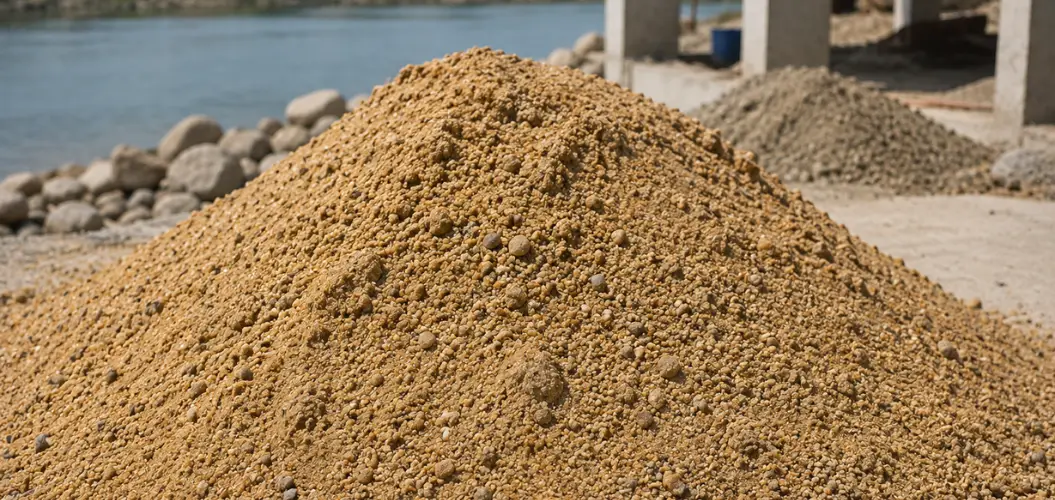
River sand has been traditionally chosen in construction owing to its natural texture and ease of handling. In general, river sand is usually rounder because of natural flow. This makes it easy to mix in mortar, plaster, and concrete.
Yet, there is a high degree of dependency on the quality of river sand from the place where it was extracted. This sand might contain silt, clay, organic material, or excessive moisture if it was not washed or sorted out. Unregulated extraction is another concern. According to UNEP, 50 billion tons of sand and gravel are extracted globally every year, which makes sand and gravel second in resource usage after water.
Where river sand is commonly used
- Masonry mortar
- Plastering work
- Concrete mixes
- Flooring base layers
- General site work
For Residential builders, the challenge is not only finding sand. It is sourcing sand that performs consistently from one stage to the next.
M-Sand: The Manufacturing Solution
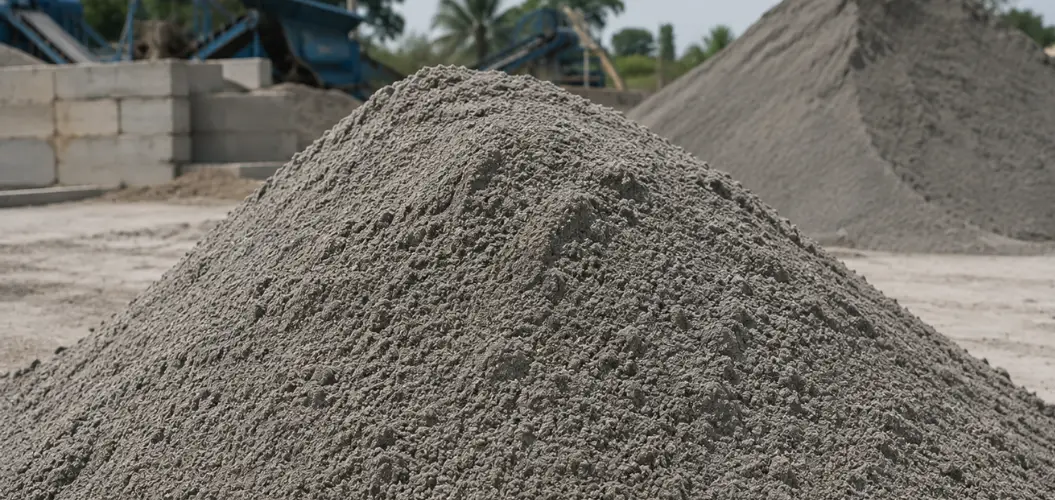
M-Sand, or manufactured sand, is a product obtained through the crushing process of stone to make fine aggregate. M-sand is mostly used in situations where sand availability is limited or tightly regulated.
The most important feature of M-Sand is that there will be greater control over grading and aggregate shape since M-Sand is a manufactured product.
However, all M-Sands may not necessarily be good since poor manufacture may result in the generation of excessive fine material, flakes, dust, or uneven grading.
M-Sand can be used in:
- Concrete works
- Masonry mortar
- Plaster, if manufactured as plaster grade M-Sand
- Paver blocks and precast products
- Structural & non-structural works depending on quality
The critical point is not what you call it but how well it conforms to your requirement.
Concrete Sand For Footing and Foundation
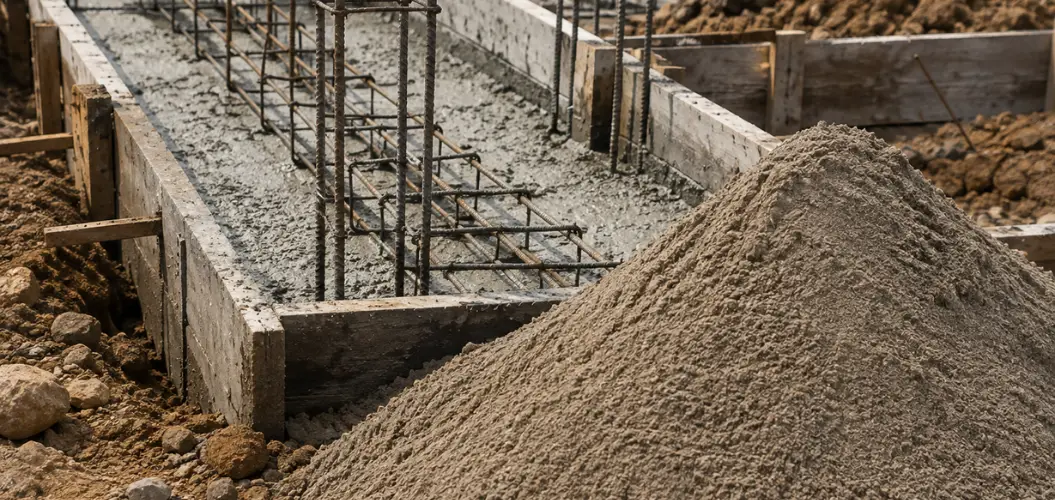
The concrete sand is normally coarse and more appropriate for concrete mixes. It ensures that a workable but robust mix is formed from cement, coarse aggregates, and water.
This is particularly crucial when it comes to footing and foundation. The foundations carry the load into the ground; therefore, the concrete quality at this point cannot be taken lightly. The sand used for foundation concrete should be clean and graded appropriately to provide a suitable concrete mix.
Bad sand for foundation work can affect:
- Workability of the mix
- Bond with cement paste
- Density of the concrete
- Compaction of the concrete around the reinforcement
- Longevity of the concrete
- Risk of honeycombing
How The Wrong Sand Can Affect Construction Quality
A small saving in sand can become a large repair later. Let’s understand what the wrong types of sand can do to the construction quality:
| Construction Stage | What Poor Sand Can Cause |
|---|---|
| Foundation Concrete | Weak mix, poor compaction, honeycombing, and lower durability. |
| Masonry Work | Weak bonding, uneven joints, and poor wall stability. |
| Plastering | Cracks, rough finish, debonding, and uneven surface texture. |
| Floor Screed | Level variation, weak base, and poor tile fixing support. |
| Waterproofing Layers | Poor bonding, leakage risk, and reduced system performance. |
| Finishing Work | Patchy surfaces, extra corrections, and higher finishing cost. |
Pit Sand and Fill Sand: Good, But Not in Every Place
Pit sand is dug out of the ground beneath the soil level. It could be more abrasive than river sand. Depending on its quality, it can be used in masonry work or making mortar, but it must be tested properly.
Fill sand, however, has its own purpose. It is used mainly in filling up spaces, levelling the ground, landscaping, and backfilling. It must not be used in structural mixes without meeting the necessary technical standards.
Some helpful tips to remember:
Structural mixes need appropriate sand. Filling mixes need proper filling material. Both are not the same.
Before using pit sand and fill sand, there must be tests for clay, organic matter, moisture, compaction qualities, and fitness for the proposed purpose.
Plaster Sand: Where Finishing Starts
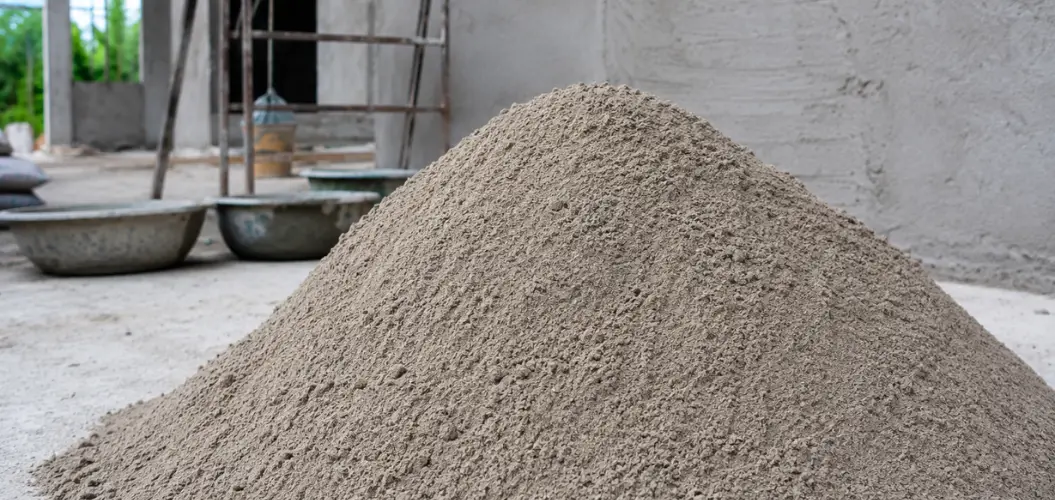
Plaster is one of the most noticeable aspects of construction. In case there is a failure, everyone is aware of it.
Plaster sand requires finer grading as well as better purity because it will result in smoothness of the wall finishes. BIS has prescribed IS 1542:1992 specifically for plaster sands, which proves that plaster sand has its own specifications and cannot be considered as leftover sand from construction sites.
Poor plaster sand results in:
- Rough finishes on walls
- Development of cracks
- Poor bonding
- Consumption of more putty
- Irregular paint finishes
- Need for repeat patching
That is why quality of finishing starts not with the paint but with plaster and sand.
Pre-Site Checks for Simple Assessment of Sand
Not every check needs a lab on day one, but casual approval is risky. Sand should at least be visually and practically checked before use.
Basic checks that matter:
Colour and cleanness: The sand must not be dirty and mixed up with other materials.
Presence of silt: Too much silt will reduce the bonding properties.
Moisture content: Wet sand expands in volume and affects the measurement.
Size: Sand must correspond to the purpose – plastering, mortaring or making concrete.
Supplier consistency: Reliable sources matter for different project stages.
Laboratory tests: For structural work, laboratory tests must be conducted if necessary.
For large-scale and high-quality projects, laboratory tests and supplier information should be included in the checking process.
Sand Choice In Residential Construction
In a home project, sand is used almost everywhere. It goes into PCC, RCC, masonry mortar, plaster, flooring base, waterproofing layers, external works, and finishing support.
That is why homeowners should not think of sand as a minor purchase. It affects multiple stages of the build.
In residential construction, the right sand helps with:
- Stronger concrete mixes
- Better wall bonding
- Cleaner plaster finish
- Reduced cracks
- Better waterproofing support
- Improved long-term durability
- Fewer site corrections
For construction services, material control is a sign of serious execution. It shows whether the team is watching the foundation of the work, not only the visible outcome.
At RS Builders Mohali, we see material selection as part of the larger build process. Sand is checked based on the stage, use, source, and performance requirement. The aim is simple: use the right material before the work gets covered, plastered, painted, or tiled.
Choice Of Sand Means Choice of Performance
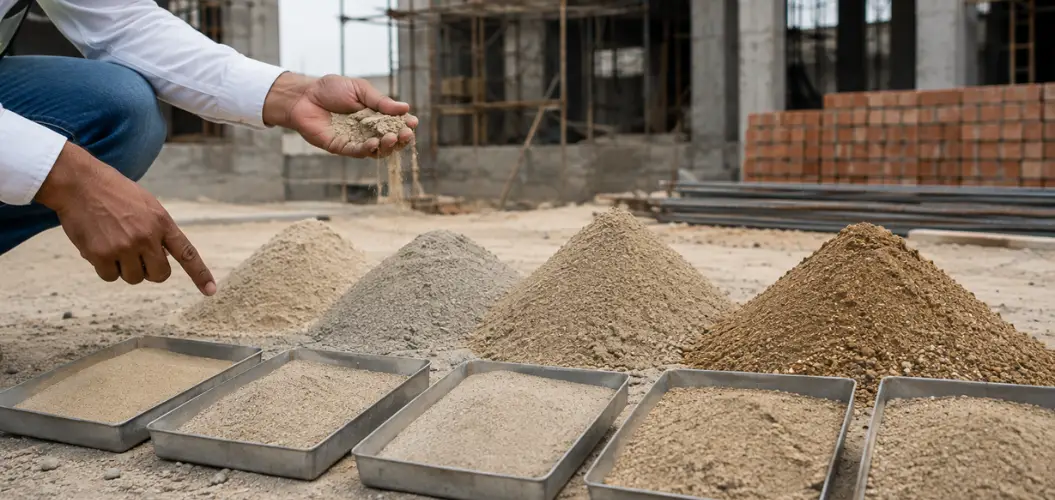
The types of sands do not just exist for rote learning. The choice of sand impacts the performance of the building.
River sand might be perfect in one location. M-sand would be better suited in another. In RCC construction, concrete sand could be ideal. Where a smooth finish is required, plaster sand would be more suitable. Fill sand might help level the surface, but not structural concrete.
The responsibility lies in matching the material to the work.
At RS Builders, the focus remains on practical building decisions. A material does not become good because it is commonly used. It becomes right when it suits the structure, the mix, the finish, and the site condition.
That is the difference between simply buying sand and building with judgement.
Final Word: The Proper Sand Will Hold More Than The Mixture
It’s easy to ignore the significance of sand on a construction site because it’s a common material. However, it should be given due consideration, since there is much at stake.
The right type of sand will enhance strength, finish, cohesion, workability, and durability. On the contrary, improper sand will cause issues that won’t come out immediately but usually appear later on through cracks, faulty plastering, wet spots, surface imperfections, or bad concrete.
Thus, when deciding whether to use one type of sand over another, the issue isn’t simply what sand is more accessible or cheaper. It’s rather about what sand is proper for the job.
Construction frequently relies on those small details that become invisible after the job is done. One of those details is sand.