Construction in India has always moved with innovation, but often in uneven steps. Some sites run smoothly, others rely heavily on last-minute decisions and fixes. For a long time, that unpredictability was accepted as normal. Delays and last-minute adjustments were common.
Now the pressure is different. Projects today are bigger, denser, and more visible. Clients expect clarity. Regulators expect compliance. And mistakes are more transparent than ever. Technology like drones, AR/VR, BIM, and robotics is entering Indian construction not as a trend, but as a response to this pressure. Quietly, steadily, and in very practical ways.
Why Construction In India Is Finally Embracing Technology

Earlier, construction workflows were simpler. Fewer stakeholders, fewer systems, and more room to adjust on site. That model struggles when projects involve multiple consultants, layered services, tight delivery schedules, and constant oversight.
What’s pushing change is not curiosity, but necessity.
- Larger projects mean more coordination
- Tighter margins mean less room for error
- Clients want explanations before problems, not after
Technology helps answer questions earlier. It reduces blind spots. It gives teams something concrete to work with instead of assumptions. That’s why adoption is happening now, not because construction suddenly became interested in software, but because complexity demanded it.
From Paper To Digital: How Planning And Coordination Have Changed
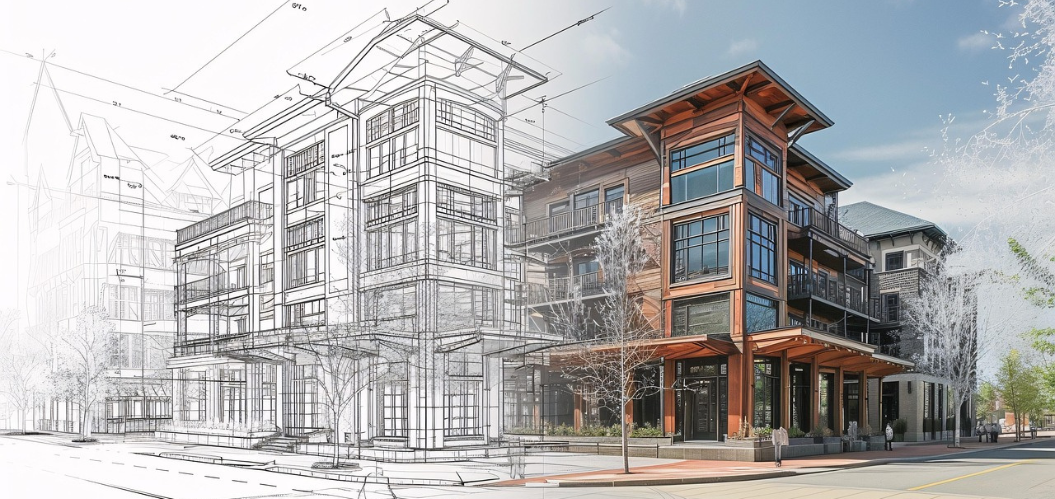
Planning used to revolve around drawings. Many drawings. Different sets, different revisions, and a lot of interpretation. Coordination often depended on experience and memory. Digital planning has shifted that starting point.
With BIM (Building Information Modelling), teams can see how structure, services, and layouts overlap before execution begins. Problems that once surfaced on site now appear on screen, where they are far easier to fix.
This has led to practical improvements:
- Clashes are identified before work starts
- Sequencing becomes clearer across trades
- Quantity and cost planning improve
With technological advancements in construction, planning hasn’t become simpler, but it has become more transparent. And transparency reduces friction.
Better Visibility And Control Across Construction Sites
Once construction starts, visibility becomes the biggest challenge. On large sites, it’s impossible to physically inspect everything every day. Progress reports help, but they often lag behind reality.
This is where drones have been able to help. Not as a replacement for engineers, but as a second pair of eyes. Aerial photographs reveal progress patterns, congestion on site, access problems, and sequencing difficulties that can be overlooked from ground level.
With proper use, this visibility enables teams to:
- Compare actual progress to plans
- Identify delays before they become major problems
- Review progress and sequencing
- Communicate site information clearly
The advantage is more than just increased speed; it is accuracy. When project decisions are informed by real-time site information, rather than delayed reports, project control increases. For major commercial and infrastructure projects, this visibility can prevent small problems from becoming hidden issues.
How Technology Enables Precision, Safety, And Consistency On Site
The construction industry is still a manual business that requires expertise and experience. However, not all work needs to be accomplished by human hands alone.
This is where robotics and automation can come into play, in small but important ways. Repetitive tasks that require precision, or are high-risk, can be assisted by technology.
In real conditions, automation helps by improving consistency where tolerances are tight, reducing physical strain on workers, and limiting exposure to hazardous zones
The important part is selectivity. Technology works best when it supports people, not when it tries to take over processes that depend on experience.
A surprising number of construction issues come down to interpretation. Drawings can be accurate and still misunderstood. Scale, height, and movement are difficult to imagine on paper.
This is where AR/VR walkthroughs have changed how discussions happen. When clients and teams can experience a space virtually, decisions become clearer. Questions get sharper. Doubts surface earlier. It doesn’t replace drawings but complements them in a way that avoids costly misunderstandings later.
Early visualisation helps:
- Align expectations before execution
- Reduce late-stage design changes
- Improve confidence in approvals
How Technology Is Improving Quality And Site Safety
Quality and safety have always depended on discipline and supervision. Technology adds consistency to that effort.
Digital technology makes it simpler to document inspections, monitor problems, and follow through with corrective measures. Problems don’t get lost in notebooks or memory. They remain in sight until they are solved.
The benefits are:
- Recurring problems are identified more quickly
- Audit documentation is improved
- Responsibility is easier to assign
Challenges In Adopting Construction Technology
Adoption is rarely smooth. Tools don’t fail as often as implementation does. The projects that succeed tend to move slowly at first. Tools are introduced one by one. Training happens alongside use. Feedback from site teams is taken seriously. This gradual approach builds trust instead of resistance.
Some common challenges show up repeatedly:
- Teams are not trained for AR/VR walkthroughs properly.
- Software is often chosen without site input.
- Expecting tools to fix weak planning.
- Data is not updated regularly, so dashboards become pointless.
- Multiple vendors use different formats, and nothing aligns properly.
Why Technology Needs Experience To Actually Work
Technology produces information. Experience turns that information into decisions.
Construction still involves variables that software can’t fully capture. Weather, labour behaviour, site constraints, and sequencing pressures all require judgement.
Experienced builders know when data tells the full story and when it doesn’t. At RS Builders, technology supports planning, monitoring, and coordination, but execution decisions remain grounded in site reality. Digital tools help ask better questions. Experience helps answer them.
What This Transformation Means For Future Projects In India
As technology becomes part of everyday practice, construction outcomes are becoming more predictable. Not perfect, but steadier.
Clients see fewer surprises. Teams deal with fewer emergencies. Decisions happen earlier, when they’re easier to manage.
Over time, this changes expectations. Projects are judged not just by speed, but by control and clarity.
Takeaway: Moving Forward With Technology
Technology is not reshaping Indian construction through dramatic shifts. It’s doing so through quieter improvements that remove friction from daily work.
The best projects are not necessarily the most digital. They are the ones where technology is used judiciously, with experience, and in accordance with site conditions.
It is this delicate balance between innovation and practicality that will define modern construction in India.