Have you noticed tiny gaps under a floor, small cracks in a wall, loose joints around tiles, or hollow spaces near a foundation? If not taken into consideration early, they can all become bigger problems later. That is usually where grouting in construction helps.
Grouting is one of those quiet jobs that do not get much attention, but make a great difference. It helps fill spaces, supports structure, and reduces the kind of movement or seepage that can spoil an otherwise solid build.
What is Grouting?
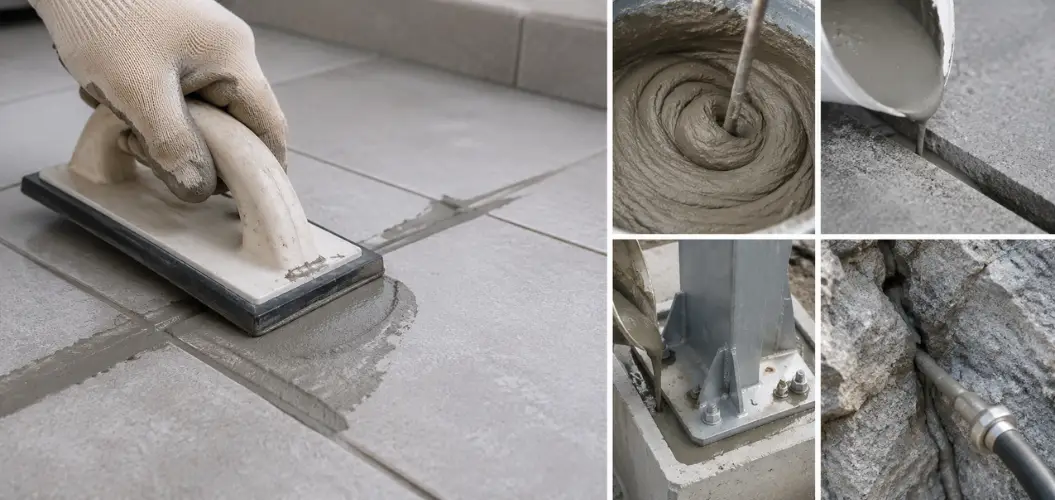
Grouting refers to adding a fluid material into crevices, seams, voids, or openings in order for it to solidify in these places. Grouting can be used in construction, whether for concrete, masonry, or tiling, as well as in various repairs. Grouting aims at providing a sense of completeness and solidity in loose places. A structure should not depend on guesswork or leftover voids. Grout helps remove that uncertainty.
Why Grouting Matters
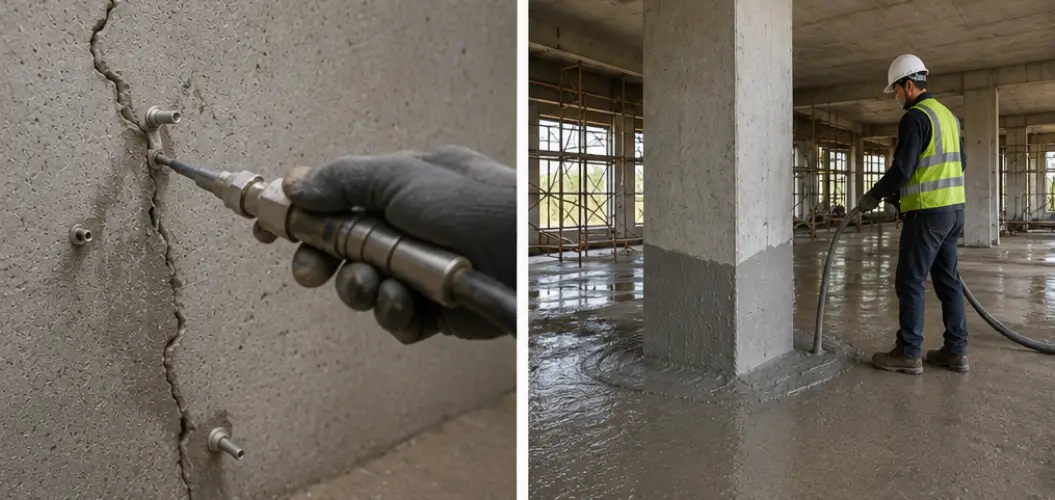
It is easy to overlook grouting because it usually sits behind the scenes. However, it plays a very important role in the life cycle of any structure.
The right grouting can ensure:
- The prevention of water leakage
- Strengthening of weak or unbalanced surfaces
- Bonding between surfaces
- Distribution of weight
- A longer-lasting repair
For domestic use, this translates to fewer damp areas, reinforced tiles, and stronger floors or structures. In commercial applications, it would be useful in repairing machinery bases, strengthening structures, and creating a resilient surface.
And honestly, that is the point. A good build is not only about polished surfaces. It is also about what is holding everything in place.
Types of Grouting in Construction
The types of grouting in construction depend on the problem being solved. A leaking basement does not call for the same material as a machine foundation, and a cracked slab does not need the same approach as a soil stabilisation job.
Cement grouting
This is one of the most common kinds. It uses cement mixed with water, and sometimes fine sand, to create a mix that can flow into gaps and harden there.
Some applications include:
- Void filling underneath structures
- Repair of slabs
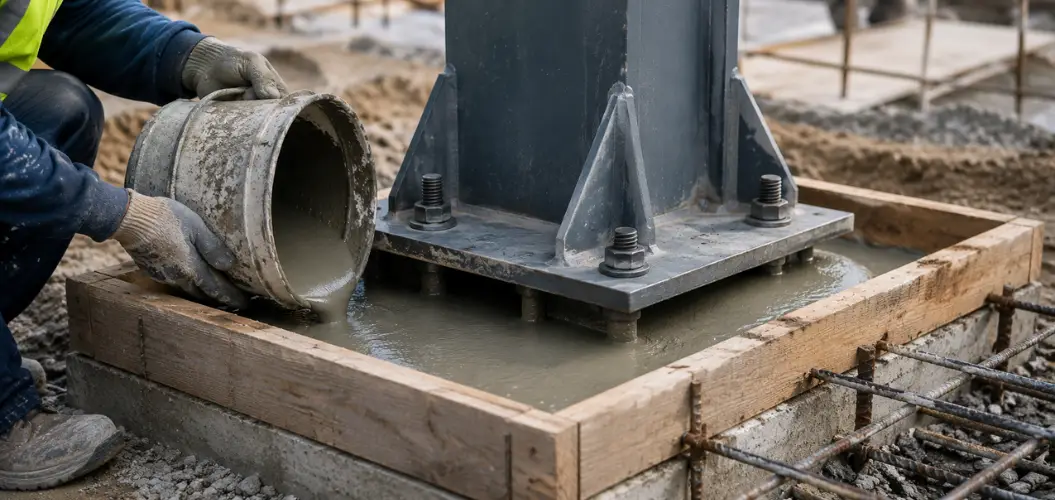
- Column foundation supports
- General masonry reinforcement
Cement grouting is popular because it is practical and works well in many everyday construction jobs.
Chemical grouting
Chemical grouting is used when the aim is sealing rather than bulk filling. It can move into very small cracks and harden quickly, which makes it useful where water is finding its way through.
It is often used in:
- Basements
- Tunnels
- Leaking walls
- Waterproofing repairs
This type of grout is usually chosen when the problem is tricky, hidden, or hard to reach.
Structural grouting
Structural grout is used where strength matters most. It is common around anchor bolts, equipment bases, precast elements, and load-bearing connections.
It is often found in:
- Industrial projects
- Heavy equipment installations
- Structural repairs
- Support work around foundations
When the structure carries serious weight, there is little room for movement. Structural grouting helps keep things steady.
Bentonite grouting
Bentonite is a clay-based material that swells when it meets water. That makes it useful for sealing spaces in the ground and limiting water movement.
It is often used for:
- Wells
- Boreholes
- Ground sealing
- Water control work
It is not always the first material people think of, but in the right situation it works well.
Bituminous grouting
Bituminous grout is made with bitumen-based material. It is chosen where waterproofing and flexibility are both important.
It can be used in:
- Terraces
- Underground areas
- Tunnels
- Damp-prone surfaces
This type is often selected when moisture protection is a major concern.
Resin grouting
Resin grout is a stronger, more specialised option. It hardens quickly and creates a very firm bond, which makes it useful for demanding repair work.
It is often used for:
- Deep cracks
- Bridge work
- Strengthening repairs
- Areas exposed to high pressure
It is more specialised than basic grout, but in the right project it can be the better choice.
Common Uses of Grouting
Grouting shows up in more places than many people realise. Some uses are obvious, while others stay hidden under the surface.
It is commonly used for:
- Filling gaps under footings
- Repairing cracks in floors and walls
- Sealing tile joints in kitchens and bathrooms
- Waterproofing terraces and basements
- Stabilising soil around foundations
- Supporting machinery and heavy loads
That range is exactly why grouting matters so much. It is not one single fix for one single problem. It is a flexible method that helps in many parts of a construction project.
What Makes Grouting Work Well?
A grout mix on its own is not enough. The result depends on how the job is prepared and how carefully it is carried out.
A good grouting job usually needs:
- A clean surface
- The right material for the job
- Proper application into the target area
- Enough time to cure and harden
This is where site experience really matters. The wrong grout, or rushed work, can leave gaps behind or fail to solve the real problem. The right approach, on the other hand, can make a structure feel much more stable and reliable.
At RS Builders, we always treat these details seriously. They may not be the most visible part of the project, but they often decide how well the structure holds up later.
Final Thoughts
Grouting in construction may not be the part that grabs attention first, but it does a lot of the work that keeps a building sound. It fills hidden spaces, supports important areas, and helps protect against water, movement, and wear.
Whether it is a home, office, or commercial property, choosing the right type of grouting can save trouble later. And in construction, that kind of careful decision always pays off.
Frequently Asked Questions
- Is grout the same as cement?
Not exactly. Cement is one ingredient often used to make grout, but grout itself is a flowable material designed to fill gaps, joints, or voids in construction.
- How long does grouting usually take to dry?
It depends on the material and site conditions. Some grouts set within hours, while others may need a full day or more before the area is ready for use.
- Can grouting help stop wall seepage?
In many cases, yes. Certain types of grout are used to seal cracks and reduce water movement through walls, basements, or concrete surfaces.
- When should old grout be replaced?
Grout should be checked if it starts cracking, crumbling, discolouring heavily, or allowing water to pass through joints and surfaces.
- Does every construction project require grouting?
Not every area needs it, but most projects use grouting somewhere, especially around tiles, foundations, repair zones, structural joints, or waterproofing work.