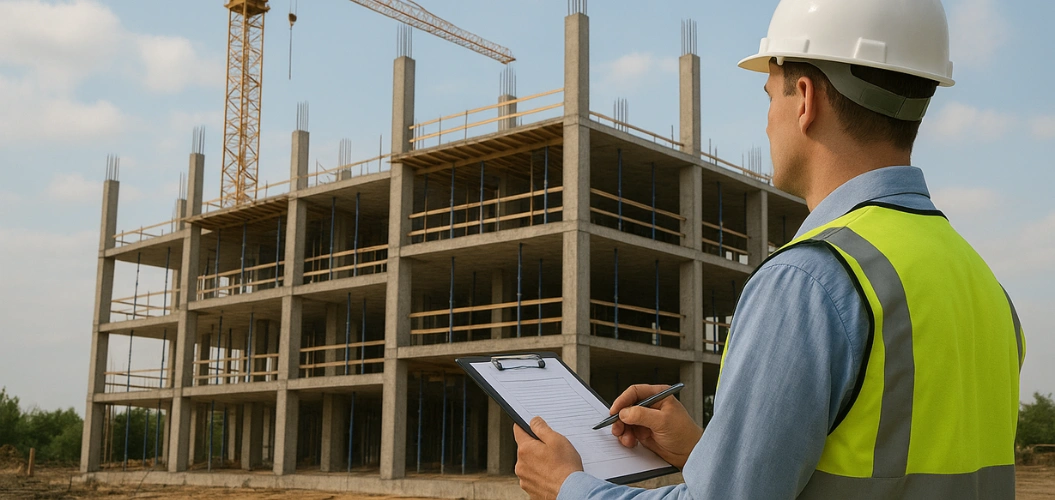
The stakes are always high in construction, be it financial commitments or aesthetic expectations. You are building an asset that must stay safe, stable, and impressive for decades. That is why conducting a structural audit during construction is crucial.
You do not want to discover a structural issue after you lay the tiles and install the glass. The construction must be flawless and structurally sound, and that’s exactly what a well-run structural audit ensures.
What is a Structural Audit
A structural audit is a systematic health check of the building’s skeleton while it is being built. Instead of waiting for the project to finish, the audit runs alongside the construction activity. It checks whether the builders construct the structure exactly as per the drawings, design codes, and approved specifications.
In simple terms, it answers questions like:
- Are the foundations, columns, beams, and slabs as strong as they should be
- Are the right materials being used in the right proportions
- Is the workmanship safe, consistent, and aligned with the design
- Will this structure be able to take real-world loads over time
Unlike a casual site visit, a structural audit follows a clear method. It checks drawings, tests materials, reviews workmanship, and documents everything. You either receive a green signal with minor notes, or you receive specific action points for the deviations.
Who Conducts a Structural Check
A proper structural audit is always led by qualified professionals. Usually, you will see:
- Independent structural engineers
- Structural consultants associated with your design team
- Quality control engineers from the construction company
In many high-value projects, a third-party structural consultant is engaged. This keeps the process objective and transparent.
You get peace of mind that a specialist has checked the structure and you are not expected to understand technical detailing. You get clear, simple summaries and a brief about the corrective actions.
Conducting a Structural Audit
Be it residential construction or commercial construction, the flow of a structural audit is somewhat similar across sites. It typically moves through stages like these.
Review Of Design And Drawings
Before anyone looks at concrete or steel on site, the audit starts on paper. The structural engineer:
- Reviews the structural drawings and load calculations
- Checks alignment with relevant codes and standards
- Confirms that the design suits the soil, span, and height conditions
This step sets the benchmark. The engineer now knows what should be present on site and what numbers to expect in tests.
On-Site Inspection Of Structural Elements
After checking the documentation and paperwork, it’s time for some field work. During key stages like foundation work, column casting, beam and slab concreting, the audit team visits site to:
- Examine reinforcement detailing and bar placement
- Check formwork quality and support
- Verify cover blocks, spacing, and alignment
- Observe concrete pouring and compaction
Material Testing And Quality Checks
A good structural audit always goes beyond visual checks. You will see tests such as:
- Concrete cube testing for strength
- Steel bar testing for grade and ductility
- NDT (non-destructive testing) in special cases
The idea is simple. Do the actual materials match what is written in the design and the purchase order. If not, the audit flags it before the structure relies on that material.
Documentation And Clear Reporting
At the end of each audit cycle, you get a report. It usually includes:
- Observations of what is working well
- Non-conformities or risks spotted
- Recommended corrective actions
- Deadlines and responsible parties
You do not need to decode engineering jargon. A good construction company will walk you through the highlights and confirm when each point is closed.
Why Structural Audits Matter For Structural Integrity
A structure is only as strong as its weakest detail. It could be a poorly compacted column, a wrongly placed beam, or reinforcement that did not match the drawing.
These small deviations may not show up on day one, but they can reduce the structure’s capacity over time. Here are some reasons why your construction company should also conduct structural audit during construction.
Compliance, Codes, and Legal Comfort
In India, structural design and construction fall under multiple codes and regulations. A structural audit ensures that your construction project aligns with the building codes.
During the audit, engineers verify:
- Construction compliance with structural design codes
- Adherence to municipal and safety norms
- Implementation of the design engineer’s instructions
In case of future disputes, insurance claims, or resale, having a strong audit trail shows that you and your construction company acted responsibly.
Aesthetics And Finishing Quality
You know that feeling when a finished building just feels solid. The lines are straight, the walls are solid, and the floors feel level. That feeling comes when the core structure is built right.
Good structural alignment during construction means:
- Straight columns and beams that support clean, sharp interiors
- Even slabs that reduce problems like ponding or tile popping
- Walls that sit correctly on the structure and do not crack at joints
Structural audits catch misalignment early. Instead of trying to hide flaws with plaster or ceiling design, the team corrects the root issue.
Time Management
It might sound like an extra step, but structured audits actually save time for residential and commercial construction projects.
In the absence of structural checks during construction, you may discover issues late. That is when rework becomes painful. When you audit regularly, you avoid:
- Recasting large elements
- Pulling down fresh masonry
- Reworking routing for services
In other words, a good structural audit acts like a guardrail for your construction schedule. It helps the team move confidently from one stage to the next.
Budget Control
If you have a large-scale construction project, you already know budgets are very strict. Structural audits help you streamline your construction as per the budget.
By spotting issues early, an audit prevents:
- Large-scale structural repairs later
- Hidden defects that show up after project handover
- Claims, disputes, and service costs
You pay a little attention and time today to avoid a large invoice and a headache tomorrow.
Conclusion
Structural audits during construction are a must if you care about safety, building lifespan, aesthetics, and financial sanity. They protect your investment, your timeline, and your peace of mind.
When you plan your next construction project, do not treat structural audits as optional. Make them part of the scope of work from day one and ask clearly how your construction partners will handle the audits.
If you want a construction company that takes responsibility seriously, hire us for your next project. We, at RS Builders, offer complete turnkey construction services with real accountability. Being the best builders in Mohali, we make sure every construction project is done with a strong structure and great design.
Frequently Asked Questions
How is a structural audit different from a regular site visit?
A regular site visit is usually visual and general, while a structural audit is technical and systematic. It checks drawings, material quality, reinforcement details, and workmanship against approved designs and codes, then documents clear findings and action points.
How often should structural audits be done during construction?
Audits are most useful at critical stages such as foundation work, column and beam casting, and slab concreting. You do not always need daily checks, but you should schedule audits before and after every major structural milestone.
Who is qualified to carry out a structural audit?
Structural audits should be led by licensed structural engineers or structural consultants with relevant experience. They may work independently or alongside the project’s design team, and are often supported by quality control engineers on site.
Do structural audits delay construction timelines?
When planned properly, structural audits do not delay work. They run alongside the construction schedule and actually prevent future delays by catching issues early, so teams avoid large scale rework or corrective measures later in the project.
What will I receive after a structural audit is completed?
You should receive a written report that lists observations, test results, non-conformities, and recommended corrective actions, along with who is responsible and by when. This report becomes an important record for quality, safety, and future reference.