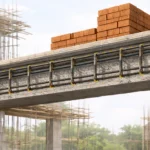
A busy construction site feels like organised chaos. Concrete, steel, wiring, pipes, ducts, drawings, checklists, everyone moving at once. Behind that apparent chaos, there is a precise relationship that holds everything together: civil and MEP working in sync.
When civil engineering and MEP systems are coordinated properly, buildings feel solid, function smoothly, and are easier to operate and maintain. When they are not, you get leaks above finished ceilings, awkward soffits, endless rework, and a lot of finger pointing.
Let us walk you through what civil and MEP actually mean, when they enter the construction process, and how to ensure smooth coordination between them for successful construction.
Civil Engineering in Construction

Civil engineering deals with the structural and site side of the project. Think of it as everything that holds and supports the building.
Civil teams are responsible for things like:
- Site grading and drainage
- Foundations and footings
- Columns, beams, slabs, shear walls
- Retaining walls, ramps, and external paving
- Basement structures and pits
They make sure the building can safely carry its own weight, the live loads of people and equipment, and environmental forces like wind and seismic activity.
On a live site, the civil team is usually the first to move. They start with setting out, excavation, foundation work, and gradually build up the structural frame. Every later activity, including MEP installation, sits inside what the civil team has already executed.
All About MEP (Mechanical, Electrical, and Plumbing)

MEP stands for Mechanical, Electrical, and Plumbing. These systems are what make a building liveable, usable, and compliant. MEP defines how comfortable and functional the space feels day to day in commercial and residential construction projects.
Mechanical
Mechanical systems usually cover HVAC and ventilation. They take care of:
- Cooling and heating
- Fresh air and exhaust
- Ductwork routing and placement
Electrical
Electrical systems handle:
- Power distribution
- Lighting and emergency lighting
- Earthing and protection
- IT, communication, and low voltage systems
- Backup power, UPS, and generators
Plumbing
Plumbing focuses on:
- Water supply and distribution
- Drainage and sewage
- Rainwater management
- Fire-fighting systems and sprinklers
You can think of civil as the body, and MEP as the nerves, veins, and lungs.
When Civil and MEP Enter The Construction Journey

Civil and MEP are not separate stories. They enter at different stages but must work in coordination from the beginning.
Early Design And Planning
- Civil engineers work on structural grids, column positions, foundation systems, floor heights, and slab thicknesses.
- MEP engineers start planning routes for ducts, pipes, and cables, and decide where major equipment such as AHUs, panels, pumps, and tanks should sit.
If this stage is done in isolation, you will see clashes later. For example, a deep beam where a main duct needs to pass, or a slab level that does not allow proper drainage slopes.
Detailed Design And Coordination
Once the basic layout is decided upon, both teams refine their drawings:
- Civil finalises reinforcement details, openings, sleeves, and inserts.
- MEP finalises pipe sizes, duct dimensions, cable tray widths, and service shafts.
This is where advanced civil and MEP coordination tools like BIM or well managed 2D overlay checks make a huge difference. They help detect clashes on screen instead of on-site, saving your time and money.
Construction And Site Execution
On site, the sequence usually looks like this:
- Civil team casts the structure and leaves provisions where planned.
- MEP team installs services through those provisions, in shafts, ceilings, and floors.
Coordinating Civil and MEP Teams

To ensure a construction project’s success, civil and MEP do not work in silos. They constantly cross-check each department’s work to avoid conflicts.
Space And Routing
Civil sets the grids, beam depths, and slab levels and then MEP uses that framework to route:
- Ducts within ceiling zones
- Pipes along walls and shafts
- Cable trays and conduits above ceilings or in risers
This sounds simple until you have multiple services competing for limited ceiling space, especially in commercial construction with complex HVAC and fire systems. Early coordination avoids impossible layouts later.
Openings, Sleeves, And Embeds
You cannot start drilling large holes in structural elements after everything is cast. So civil and MEP teams work together to:
- Mark openings in slabs and beams
- Place sleeves for future pipes and conduits
- Embed anchor bolts and equipment bases during casting
This coordination protects structural integrity and saves a lot of messy cutting and patching work.
Load And Vibration
Heavy MEP equipment like chillers, generators, pumps, and large AHUs impose loads and vibration. Civil engineers must design:
- Slabs and foundations to bear this extra load
- Supports and inertia blocks to control vibration
- Proper paths for load transfer to the ground
Common Coordination Challenges On Construction Sites

Even with the best intent, coordination between civil and MEP can go wrong if it is not managed properly. Some typical issues include:
- Clashes In Tight Spaces: Ceiling voids and shafts become crowded as ducts, pipes, and beams fight for the same space. Someone has to compromise, usually at extra cost.
- Late Design Changes: A client change, a new tenant requirement, or a revised authority condition can affect both structure and services. If this change is not communicated clearly, site teams improvise and quality drops.
- Incomplete Or Outdated Drawings: Sometimes the civil team works off an older structural drawing while the MEP team has a revised layout. This leads to a conflict in both teams as design updates were not conveyed properly.
- Communication Gaps Between Subcontractors: When multiple agencies handle different packages, no one has full responsibility. You, as the client, end up acting as the coordinator, which is the last thing you want.
Overcoming Civil and MEP Conflicts

Most of these civil and MEP conflicts are preventable. They just need disciplined processes and a construction company that actually believes in coordination, not firefighting.
Some simple but powerful practices include:
- Early Multi-Discipline Workshops: Bring civil and MEP teams into the same room during planning, not after casting. Let them review each other’s drawings and agree on priorities and constraints.
- A Single Source Of Truth For Drawings: Maintain a clearly controlled set of approved drawings and models. Everyone on site should know where the latest version lives and who is allowed to update it.
- Scheduled Coordination Meetings: Weekly or fortnightly meetings focused only on coordination issues help a lot. Civil, MEP, and project management teams walk through zones, highlight clashes, and agree on next actions.
- Use Of BIM Or Overlay Checks: Even if you do not go full BIM, simple overlay checks of civil and MEP layouts in key areas reduce surprises. For larger projects, BIM becomes a strong ally for clash detection and sequence planning.
- Clear Ownership Under Turnkey Construction Services: When one team offers true turnkey construction services, they own the coordination. The construction company need to ensure that both teams are on the same page.
Conclusion
Civil and MEP are the two components that define the success of any construction project. While the civil work keeps the structure standing, MEP keeps it working.
When they are planned early, coordinated properly, and executed through a single, reliable construction company, you get buildings that feel solid, perform well, and age gracefully. You also avoid the headache of chasing subcontractors for leaks, tripping circuits, or awkward ceiling drops.
So, next time you start a residential or commercial construction project, ensure the civil and MEP work in coordination. We, at RS Builders, ensure these verticals work in context with each other. Being the best builders in Mohali, we offer construction services that do justice to your design expectations and offer a strong foundation to the building. Connect with us today to discuss your construction project.